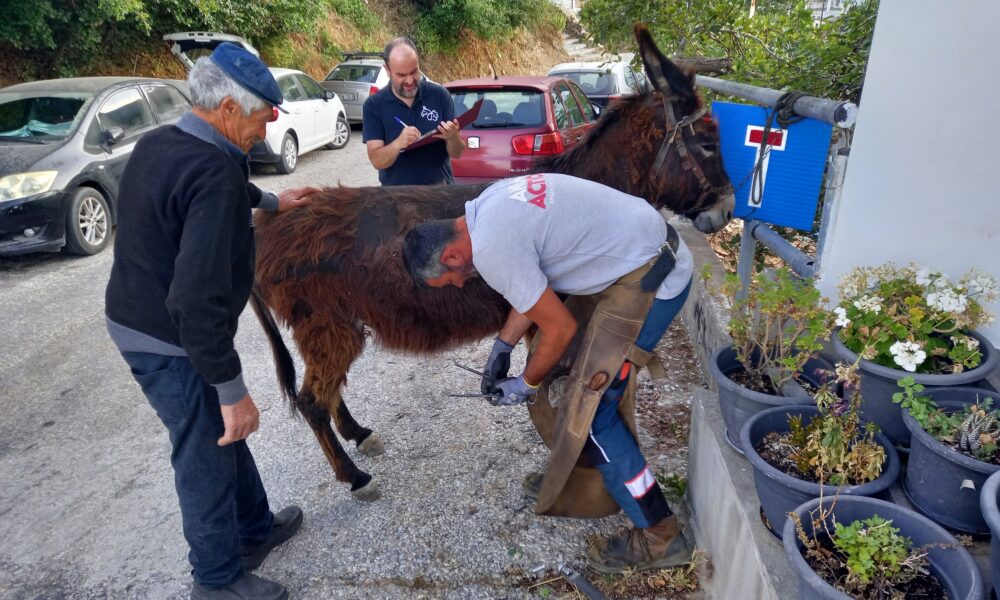
On 20–21 June 2026, the Animal Action Greece team visited the island of Naxos to provide veterinary, farriery and dentistry treatments to the island’s working equines, while also offering guidance to owners on animal health, welfare and good management practices.
Naxos is the largest island in the Cyclades, with a permanent population of approximately 19.000 residents. Unlike many other Cycladic islands, it used to have a strong primary sector, with livestock farming and agriculture (potatoes, olives, vineyards) being key pillars of the local economy alongside the growing tourism industry. The unplanned expansion of tourism and property development, combined with inadequate water management, is unfortunately having a detrimental impact on agriculture and livestock farming, with also direct consequences for the working equids that continue to support the island’s agricultural sector.
The equine population has declined significantly – possibly to less than half its size compared with the first visits carried out by our organisation more than a decade ago – , however the remaining working equines continue to play an important role in the daily lives of some island residents. They are used to carry products and to access remote areas where motorised vehicles cannot always operate. In addition, some animals are employed in tourism-related activities, while others are kept for companionship.
Despite the size of Naxos, access to specialised equine services remains limited. While veterinarians are based on the island, they primarily work with livestock and companion animals rather than equines. Furthermore, there is no resident farrier, making it difficult to address health issues promptly and to provide routine hoof care. As a result, many cases remain untreated unless a specialist outreach mission, such as the one organised by Animal Action Greece, is able to visit the island.
This particular visit to Naxos had been postponed for four years before it was finally able to take place. Nevertheless, it was one that equine owners had been eagerly anticipating. They generously contributed towards a substantial proportion of the outreach’s costs, including accommodation, meals and local transportation, and expressed their wish to welcome our team back again the following year.
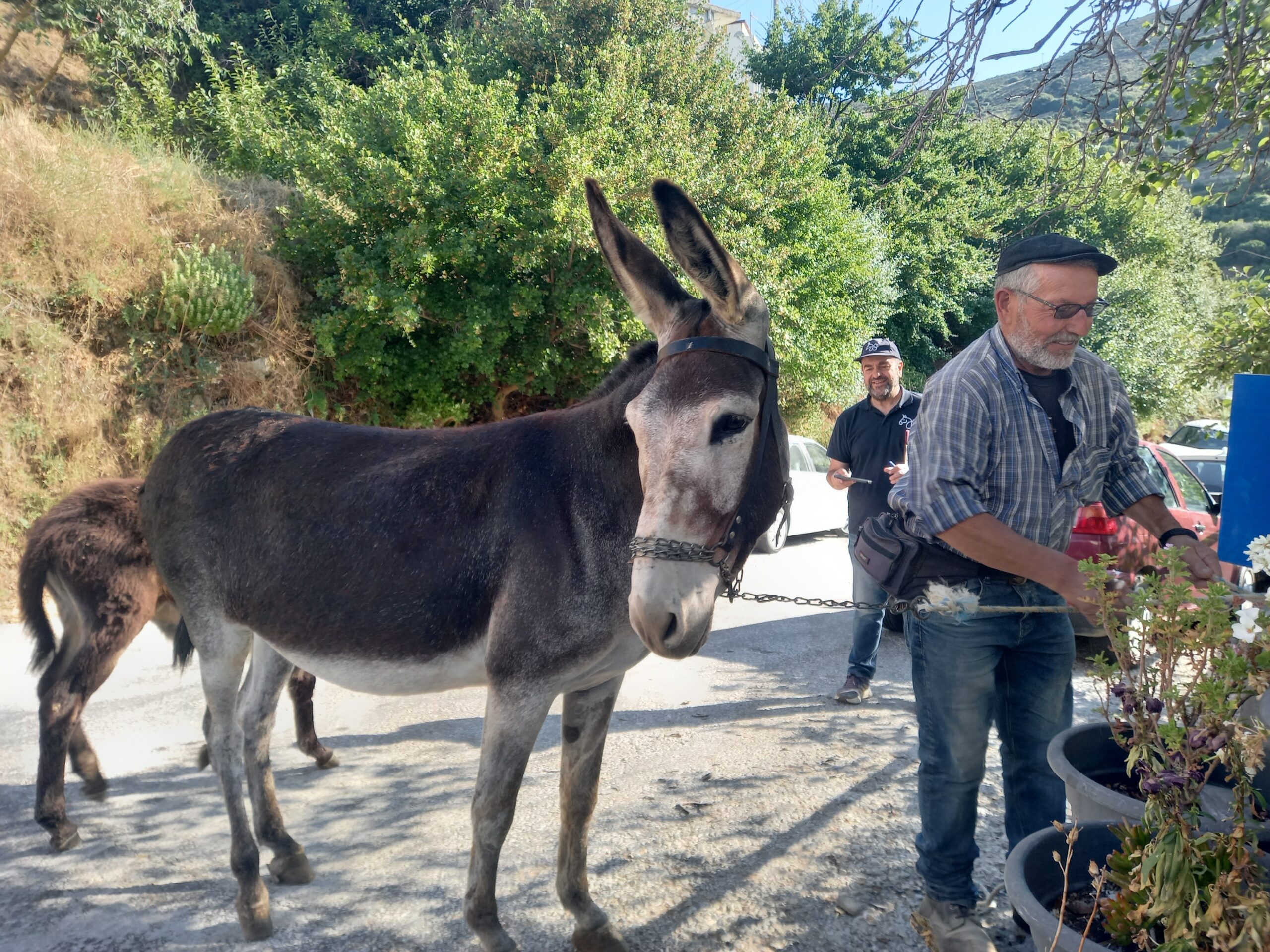
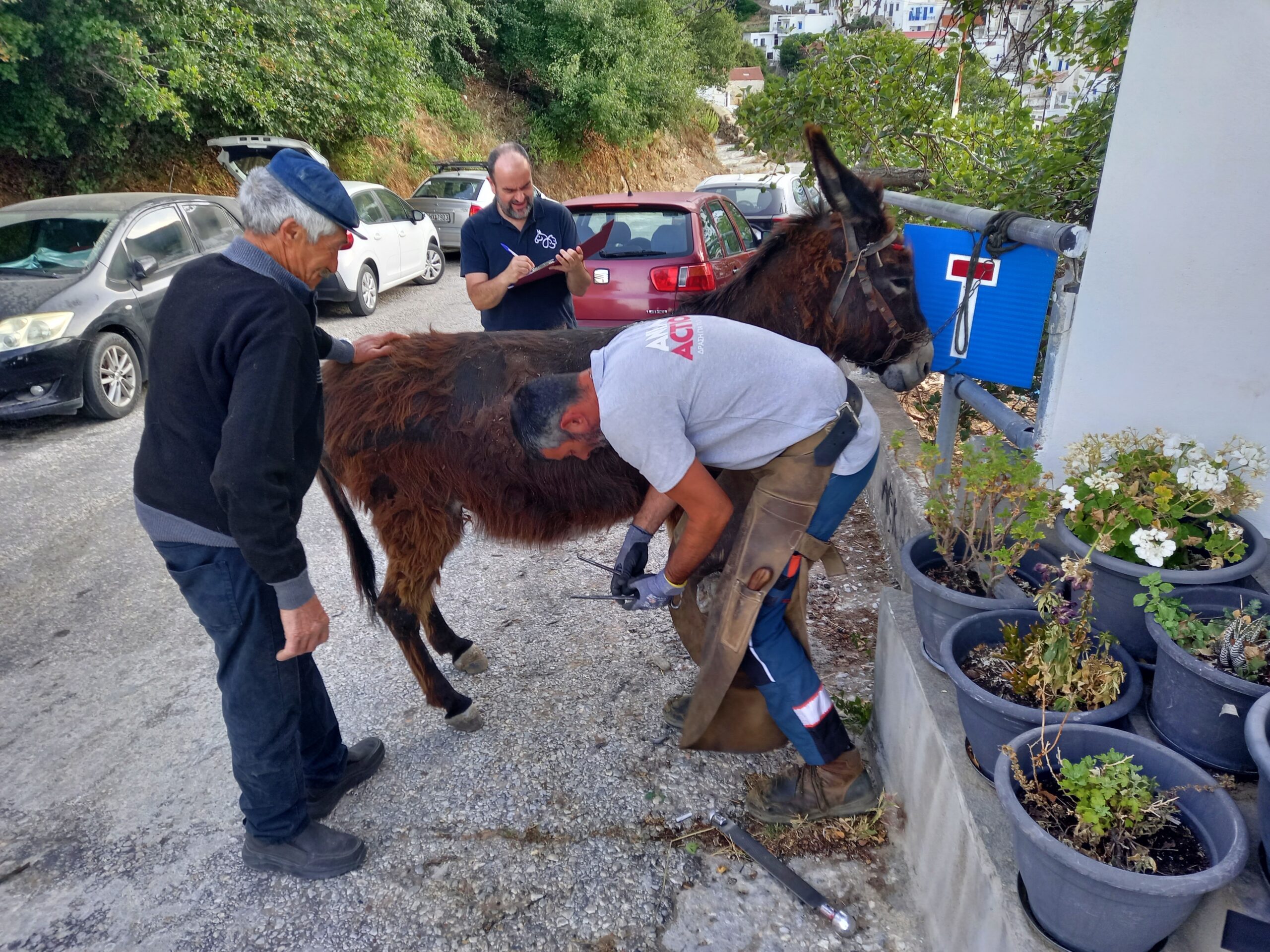
In just one and a half days, the team examined and treated a total of 25 equines, comprising 12 horses, 12 donkeys and one mule. Weather conditions were exceptionally hot, but fortunately most of the work was carried out in shaded locations.
Health status
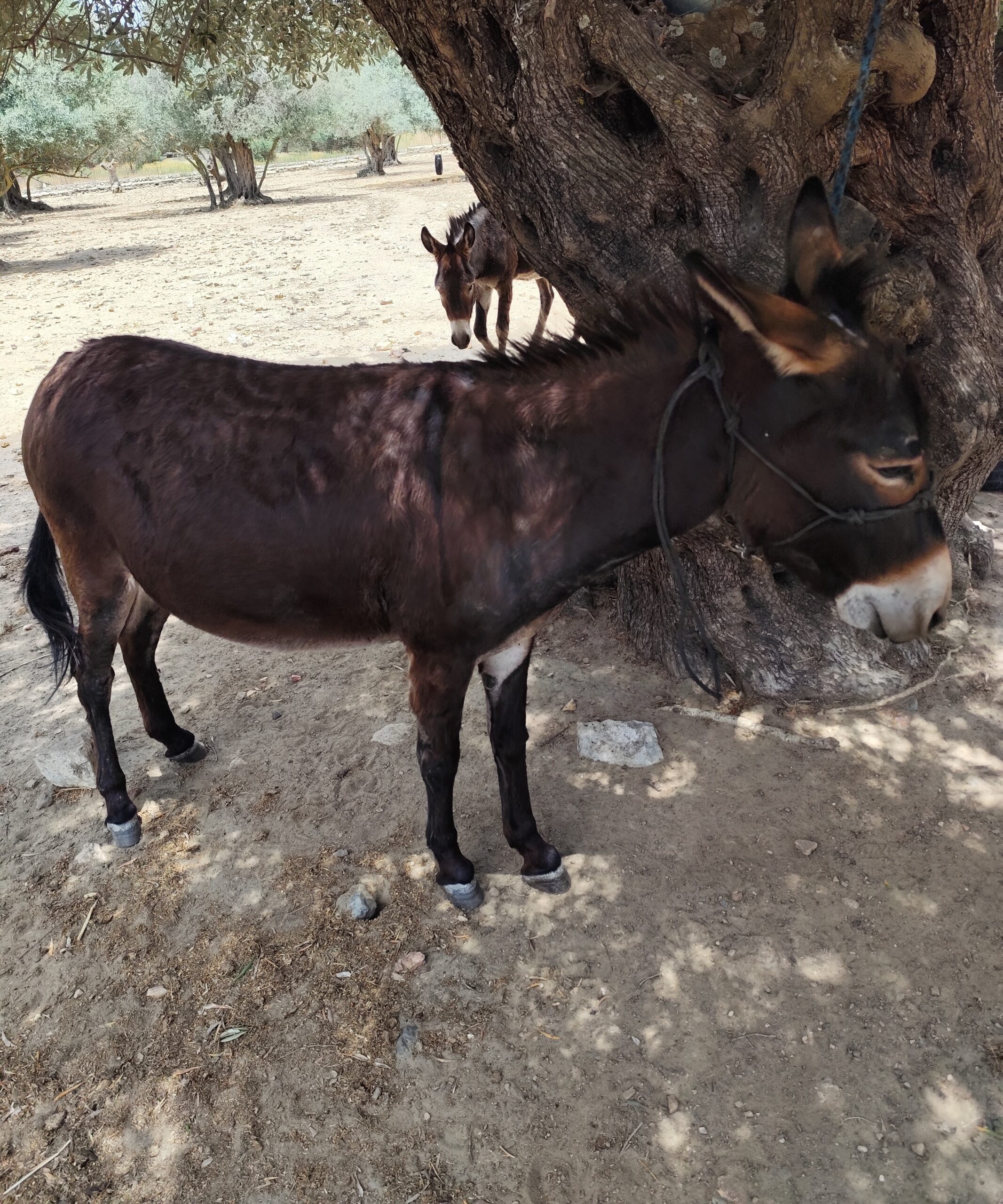
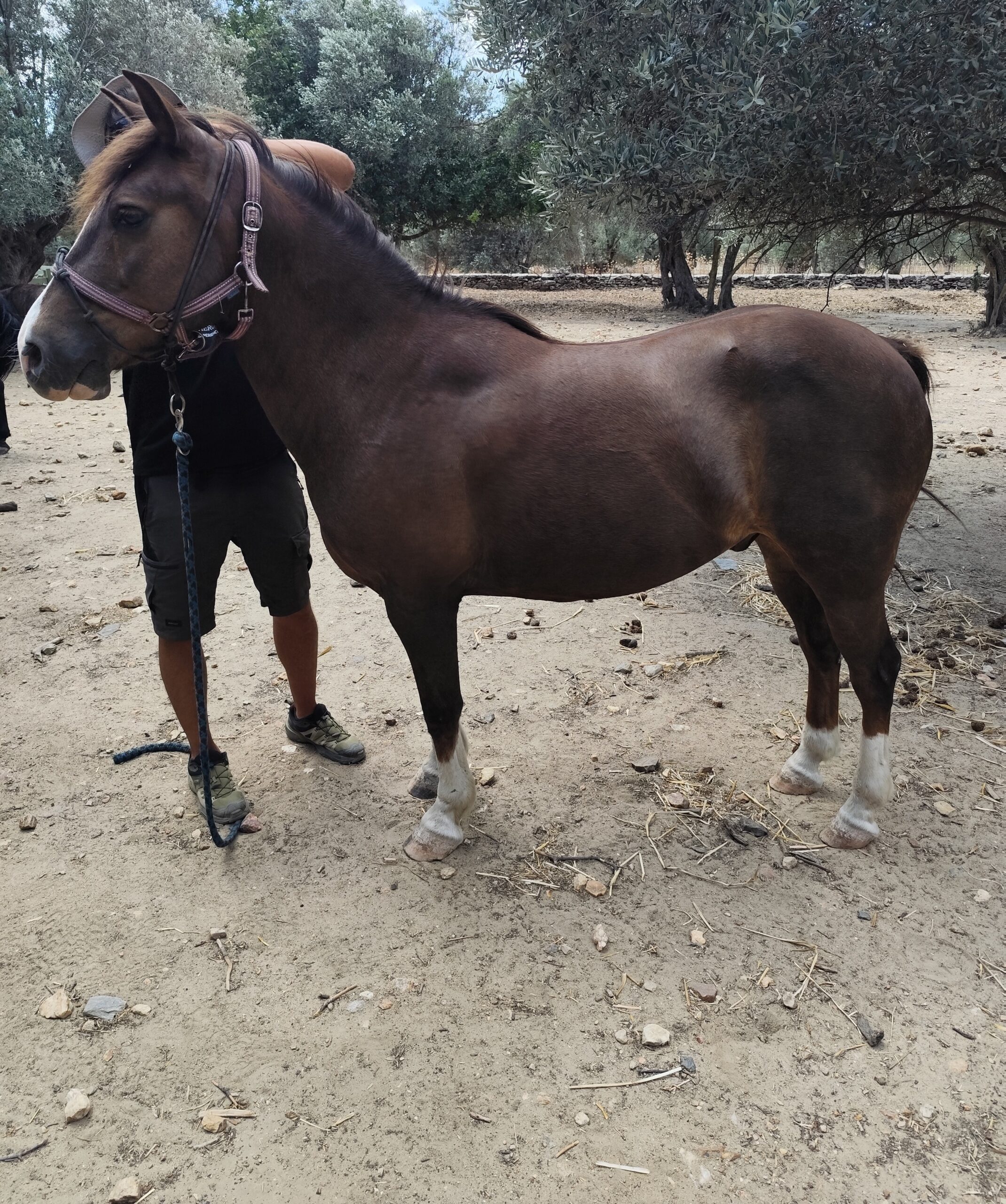
The body condition of most animals was good, with only three being underweight and three overweight. This suggests that owners generally maintain appropriate feeding practices, avoiding both underfeeding and overfeeding. Nevertheless, a considerable number of dermatological conditions were identified, with the most common issue observed severe irritation caused by flies and other biting insects. Many animals presented with skin lesions, abrasions and minor wounds resulting from persistent insect harassment.
Several musculoskeletal conditions were identified, such as joint and tendon issues, along with small injuries and treatment was given by Kostas. A number of animals showed scars around the areas where usually hobble ropes are placed, suggesting past use of this restraint method. Owners were advised about the risks associated with the unacceptable use of hobbling and safer alternative methods of restraint and management were discussed.
Farriery care
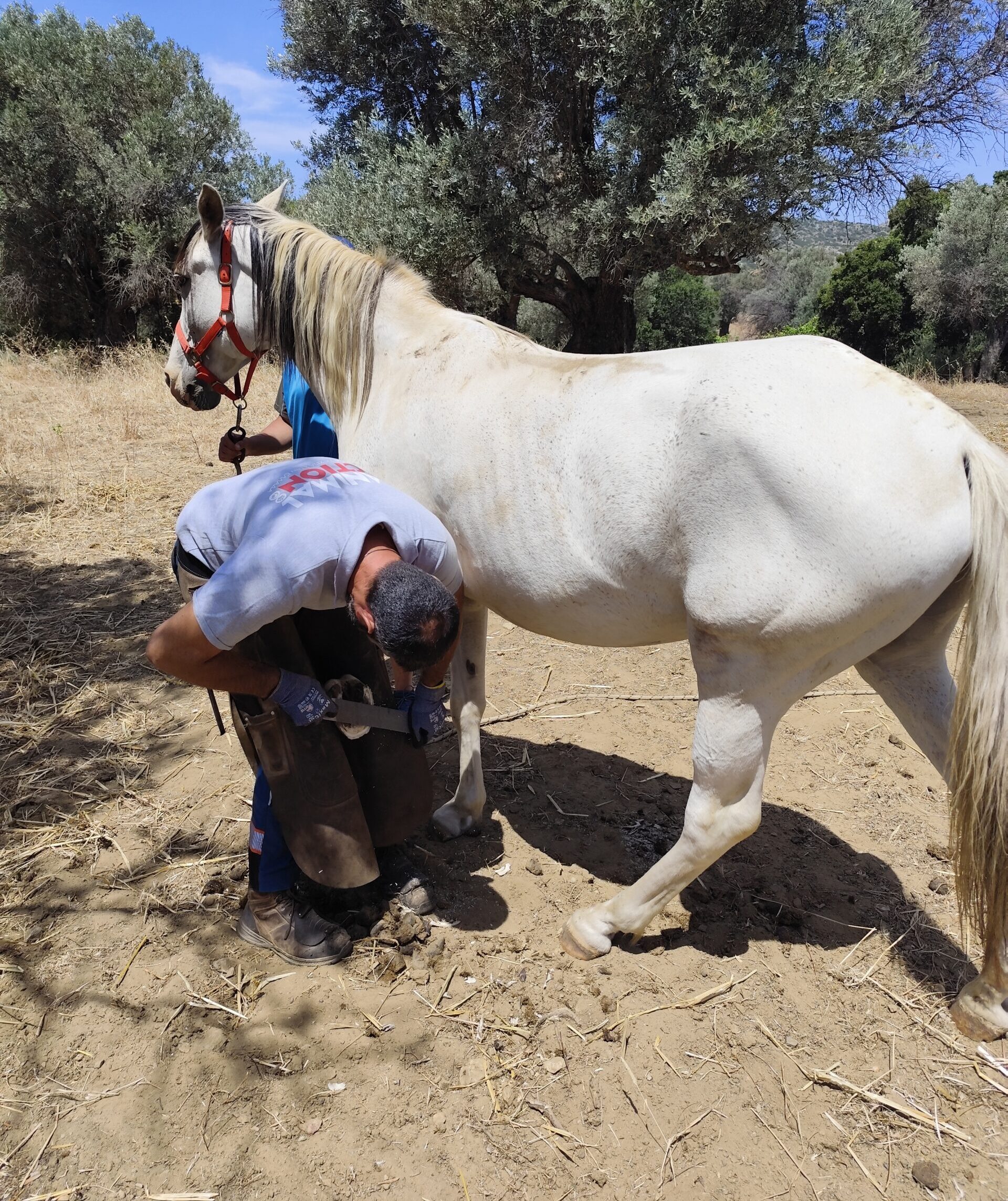
With regard to farriery, overgrown hooves were among the most significant welfare issues encountered. In several cases, they had already affected the animals’ posture and gait, while the absence of a resident farrier on the island makes regular hoof care impossible. All overgrown hooves were trimmed by Tasos, providing immediate relief to the affected animals.
The most challenging case involved an animal with a severely deformed hoof. The deformity was so advanced that even the farrier found it extremely difficult to distinguish the normal boundaries between the sole and the hoof wall. The condition most likely originated from a previous injury that had resulted in chronic lameness. Because the animal had been bearing weight unevenly for a prolonged period, the hoof had grown in a markedly distorted shape. During corrective trimming, an old hoof abscess that had become trapped within the hoof capsule was also uncovered. The hoof was trimmed as carefully as possible to restore a more natural shape and the owner was advised to rasp the hoof regularly to help maintain the correction and prevent it from reverting to its previous deformity.


Dental care
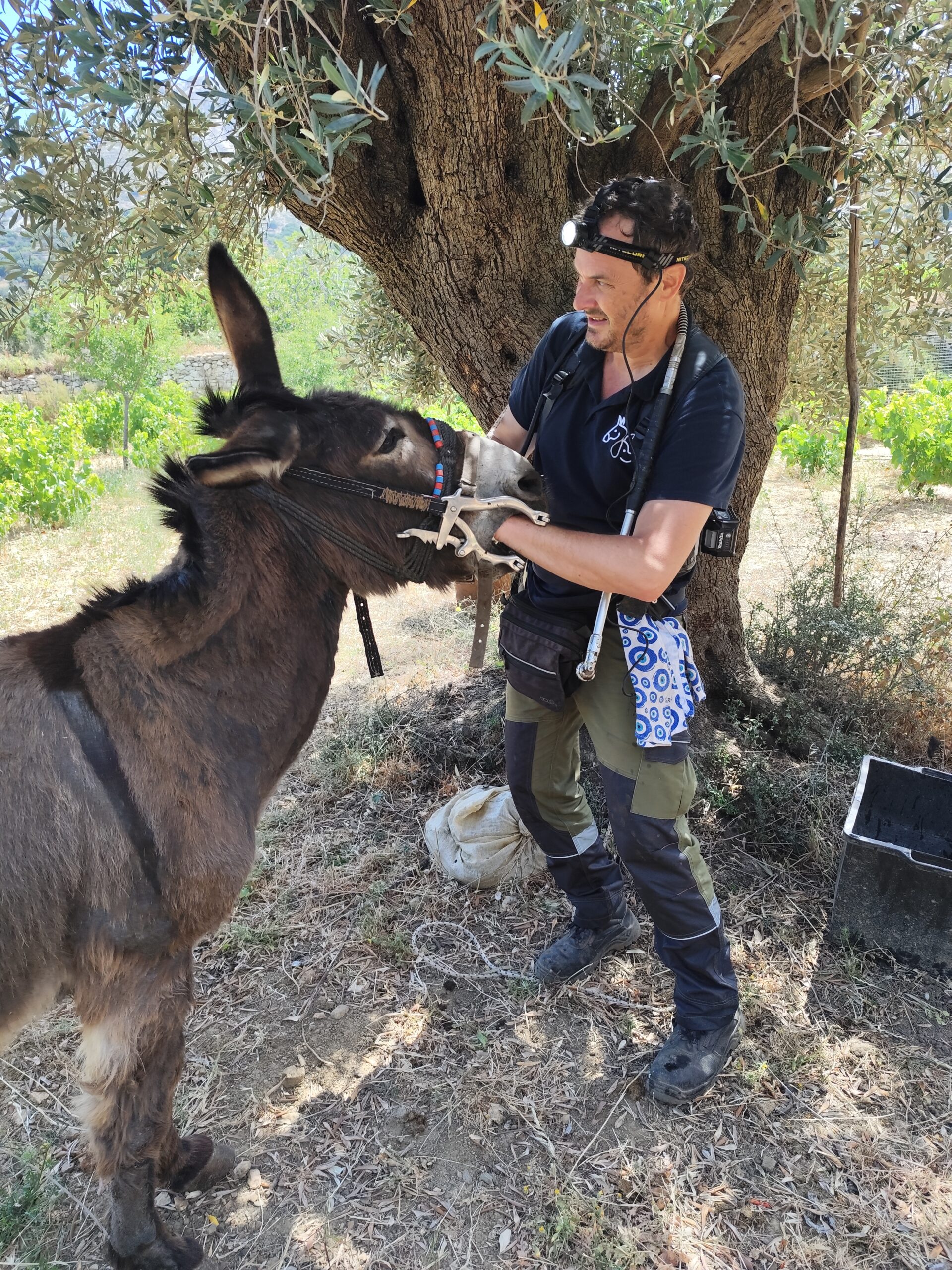
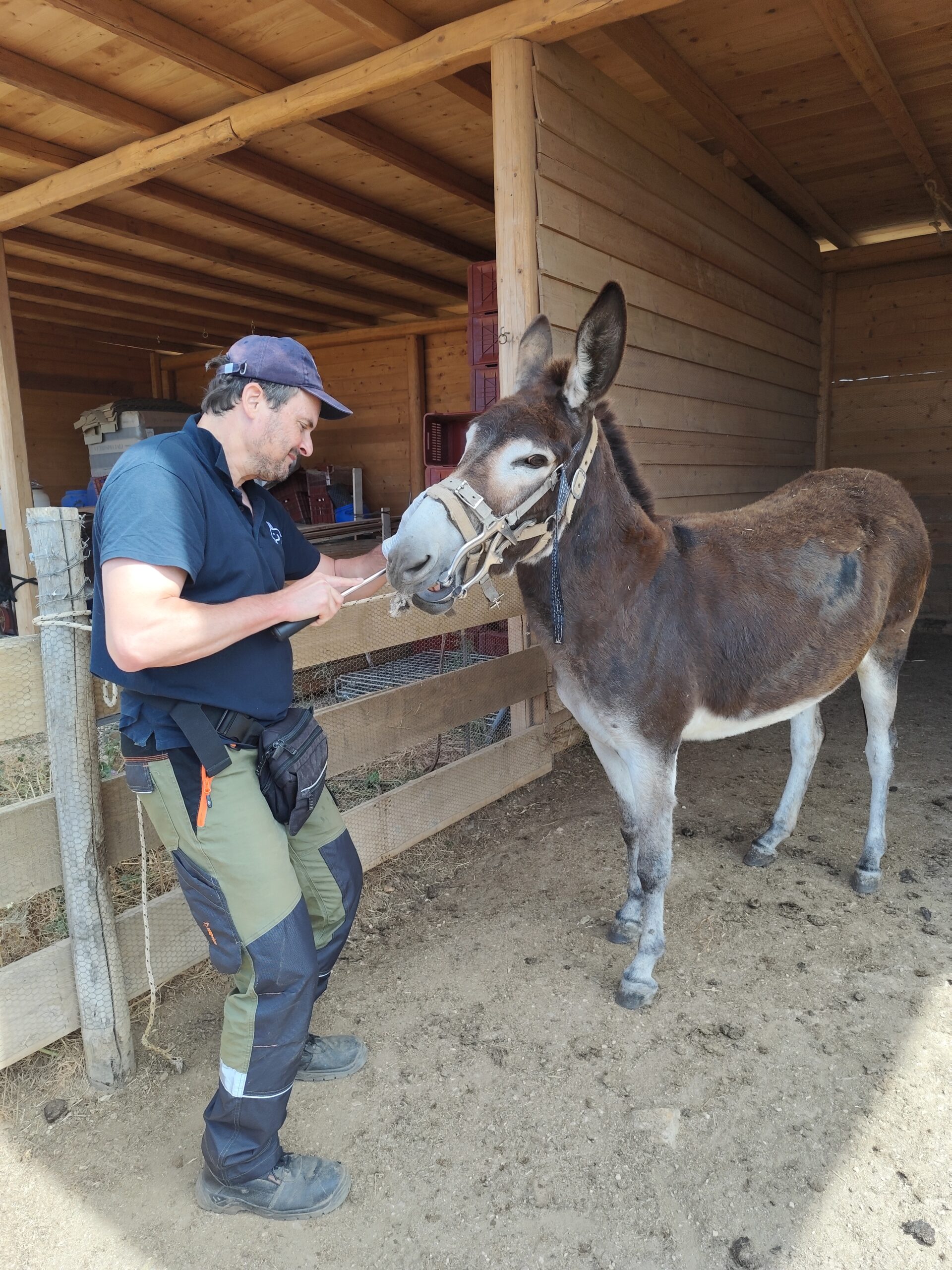
Our equine dental technician provided routine dental care, primarily floating sharp enamel points and reducing small to medium-sized dental hooks. It was particularly encouraging to hear from one owner that the small underweight pony whose overgrown tooth – preventing normal jaw movement and causing significant pain and difficulty in chewing – had been corrected by Alkis during the 2022 visit is now “doing very well and has gained weight“. Unfortunately, the limited duration of this outreach did not allow for a follow-up examination, which has now been scheduled for next year. However, the same owner brought another pony that was in urgent need of dental treatment, which was successfully carried out.
Another particularly interesting case involved a striking white horse over 20 years of age that was in very poor body condition, with its ribs and pelvic bones clearly visible despite maintaining a remarkably bright demeanour. Oral examination revealed hard, woody pieces of plant material lodged in the hard palate, which were identified as one of the main reasons that the horse had lately been struggling to eat. These were carefully removed. A large swelling was also present on the cheek, most likely the result of previous trauma and subsequent abscess formation. The horse’s dentition showed extensive wear consistent with its advanced age, largely explaining its difficulty chewing and poor body condition. The owner was given detailed instructions on daily oral cleaning, feeding a soft diet and closely monitoring the horse’s overall condition. It remains to be seen whether these interventions will enable the horse to regain the body weight he has lost.

Challenges and achievements
Organising the outreach to Naxos in combination with the visit to the island of Amorgos presented significant logistical challenges. These arose from the ferry schedules, the different departure points of the team members and the difficulty of securing accommodation during the peak tourist season. In the end, however, everything came together successfully, thanks to Elisa Geskou, the Programme’s Coordinator, who found solutions to every obstacle and ensured that the outreach was carried out under the best possible conditions.
Despite these challenges, the team was able to address a number of significant welfare needs among the island’s equines. Many animals received treatment for conditions that would otherwise have remained unattended, several of which could have progressed to life-threatening outcomes. The outreach visit also provided an important opportunity to educate owners on equine health and welfare, while further strengthening the charity’s relationship with the local community.
Particularly encouraging was the fact that the team’s accommodation, meals and local transportation costs were covered entirely through donations from the equine owners themselves. Their generosity exceeded all expectations, demonstrating both their appreciation of our professional services and their commitment to the welfare of their animals.
Conclusions
This outreach mission once again highlighted the importance of maintaining a regular presence of specialised equine professionals in Greece’s remote island communities. Although a percentage of owners demonstrate genuine concern for the welfare of their animals, the lack of access to specialised veterinary, farriery and dental services inevitably leads to the accumulation of health problems that can have a significant impact on the health and welfare of working equines.
Ongoing owner education, combined with regular professional support, remains the most effective way to prevent welfare problems and improve the quality of life of these animals.
Acknowledgements
We would like to extend our sincere thanks to everyone who contributed to the organisation of this outreach and to all the equine owners for their cooperation and hospitality. Special thanks go to Kostas Kontopoulos for coordinating our contact with the owners of equines in need on the island of Naxos. Without his support and local presence during the outreach, the action would not have been possible.
Animal Action Greece remains committed to supporting working equines in need, making a tangible difference to their health and welfare through practical, hands-on care.