
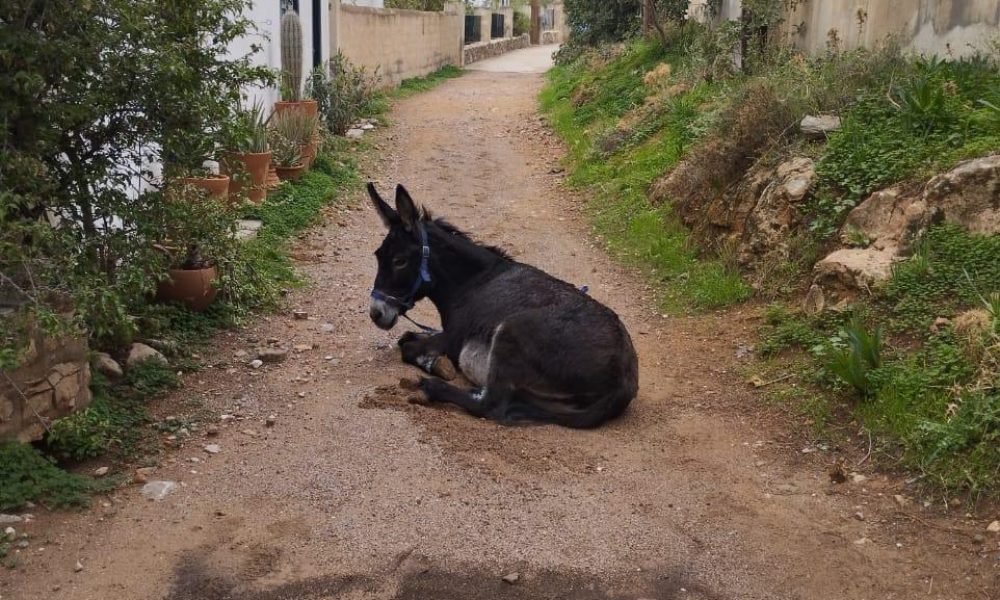
Donkey with hoof abscess
A donkey on the island of Hydra was suddenly struck with severe lameness. With no veterinarian available to travel to the island, the donkey’s owner called Elisa Geskou, our Equine Care Programme Coordinator, to ask for help. Elisa had to rely on experience and remote expertise.
Based on the owner’s description and the donkey’s history, our vet suspected a hoof abscess and guided the owner through immediate treatment, including the use of specialised veterinary equipment that he arranged to obtain. Soon after, a large amount of pus was released from the hoof and the donkey’s lameness improved dramatically.
However, just a few days later, the lameness unfortunately returned.
At that point, further remote intervention was no longer sufficient and there was still no veterinarian available to visit the island. Fortunately, our farrier Tasos had arranged a scheduled trip to the island to see other animals. During his visit, he carefully examined the donkey, performing a thorough hoof trim and assessment. What he discovered after trimming was shocking: a broken nail deeply embedded in the sole. This hidden injury was the real cause of both the abscess and the recurring lameness and pain.
Thanks to the coordination between our vet and farrier, the cause was finally identified and addressed — bringing lasting relief to the donkey. The owner sent a thank-you letter filled with heartfelt gratitude, acknowledging how the vet’s expertise and the Equine Care Programme’s support made all the difference. Welfare is not luck — it’s skill, planning and commitment.


Donkey with colic
Another donkey on the island of Hydra suffered from serious colic after eating accidentally large quantities of carobs. With no veterinarian able to attend the island, the situation was extremely worrying. Our vet suspected an impaction colic and provided the owner with clear, step-by-step guidance on how to manage the condition as safely as possible under the circumstances. Without access to hands-on veterinary treatment, the outcome could easily have been fatal — a stark reminder of how challenging conditions can be in areas where veterinary help is simply not available. Thanks to four days of the owner’s tireless dedication, careful monitoring and commitment to following every piece of practical advice given by our vet, the donkey slowly began to improve. Appetite returned, gut function normalised and the donkey was finally out of danger.
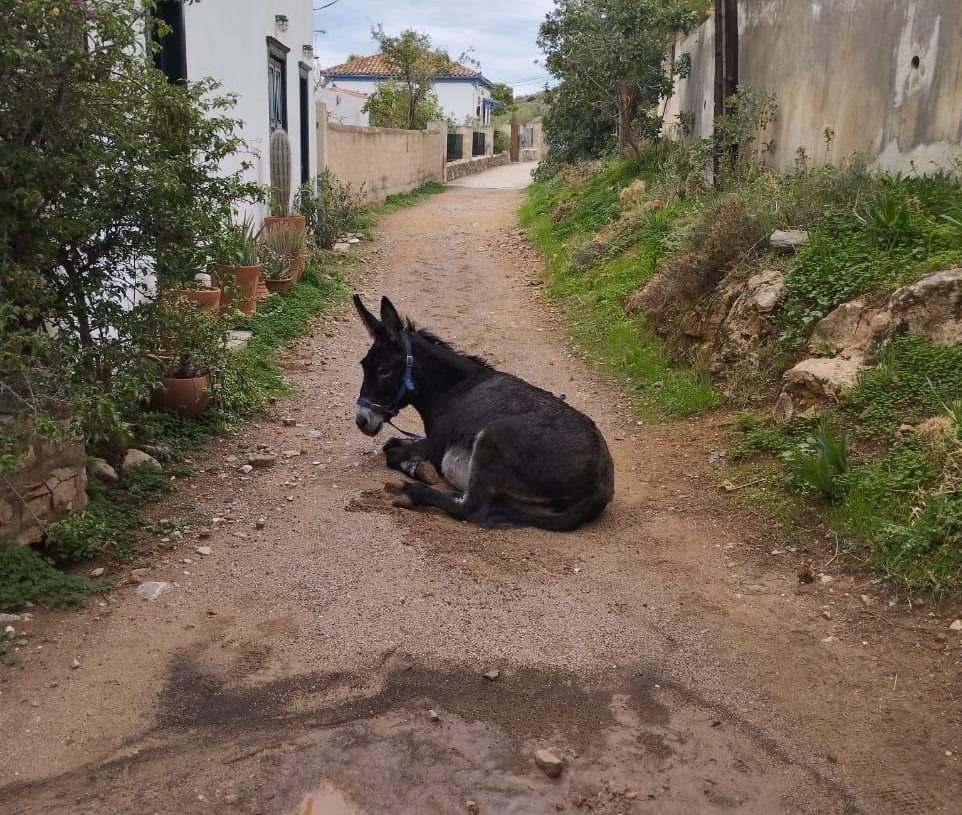
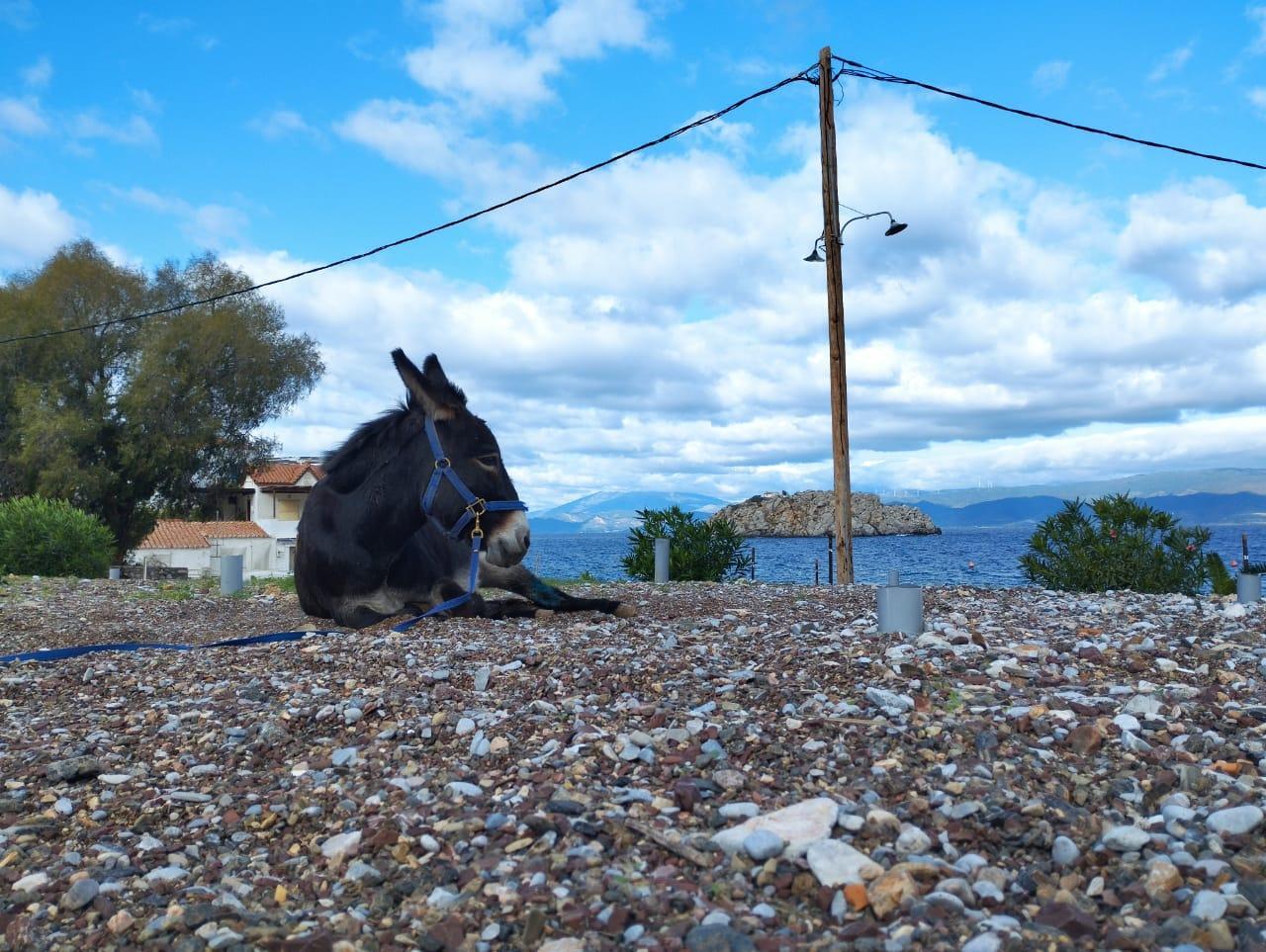
Stories like this highlight the critical importance of veterinary knowledge, owner commitment and remote support in safeguarding the welfare of working equines in hard-to-reach locations.