
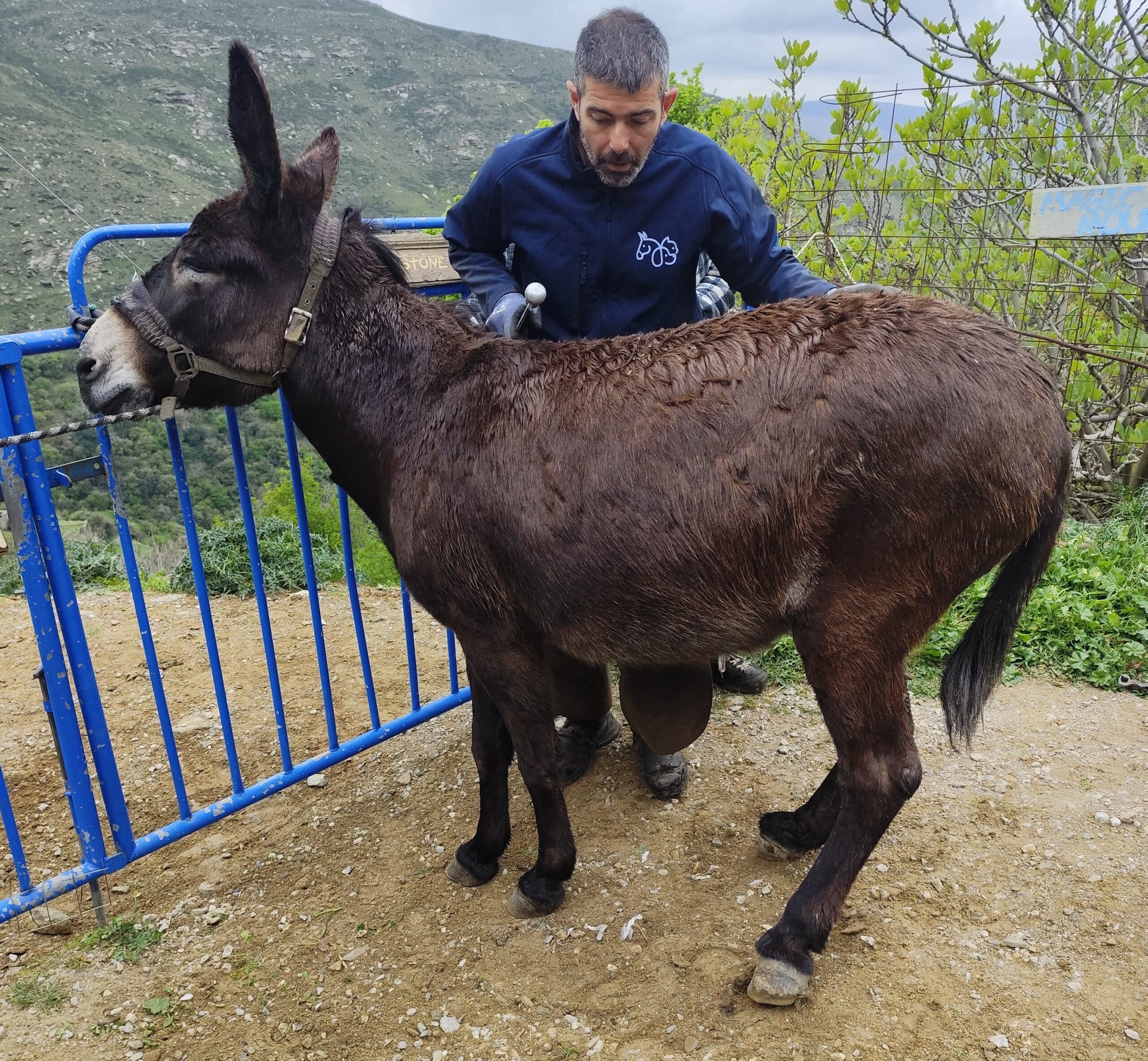
The equine care team visited Andros from the 23rd to 26th of April 2026. The team consisting of vet Kostas Okkas, dental technician Alkis Gkeskos and farrier Tasos Skyllas, visited 23 villages all around the island and offered their services to 73 equines (28 horses, 35 donkeys and 10 mules).
This year, work took place one month later than usual. This was due to local unavailability, but it eventually proved much more effective, as the team avoided this spring’s constant rain; it would not have been possible to work in Andros due to the absence of any shelter at meeting points.
Andros is the northernmost and second-largest island of the Cyclades renowned as a “green” contrast to the typical dry Aegean landscape. It feels like a miniature version of Greece, boasting tall mountains, fertile valleys and year-round natural springs. There are approximately 10.000 residents on the island. In no way does Andros actually resemble England or any part of the UK. However, it was once dubbed “Little England” mainly due to its wealth and power, owed primarily to its seafaring superiority.
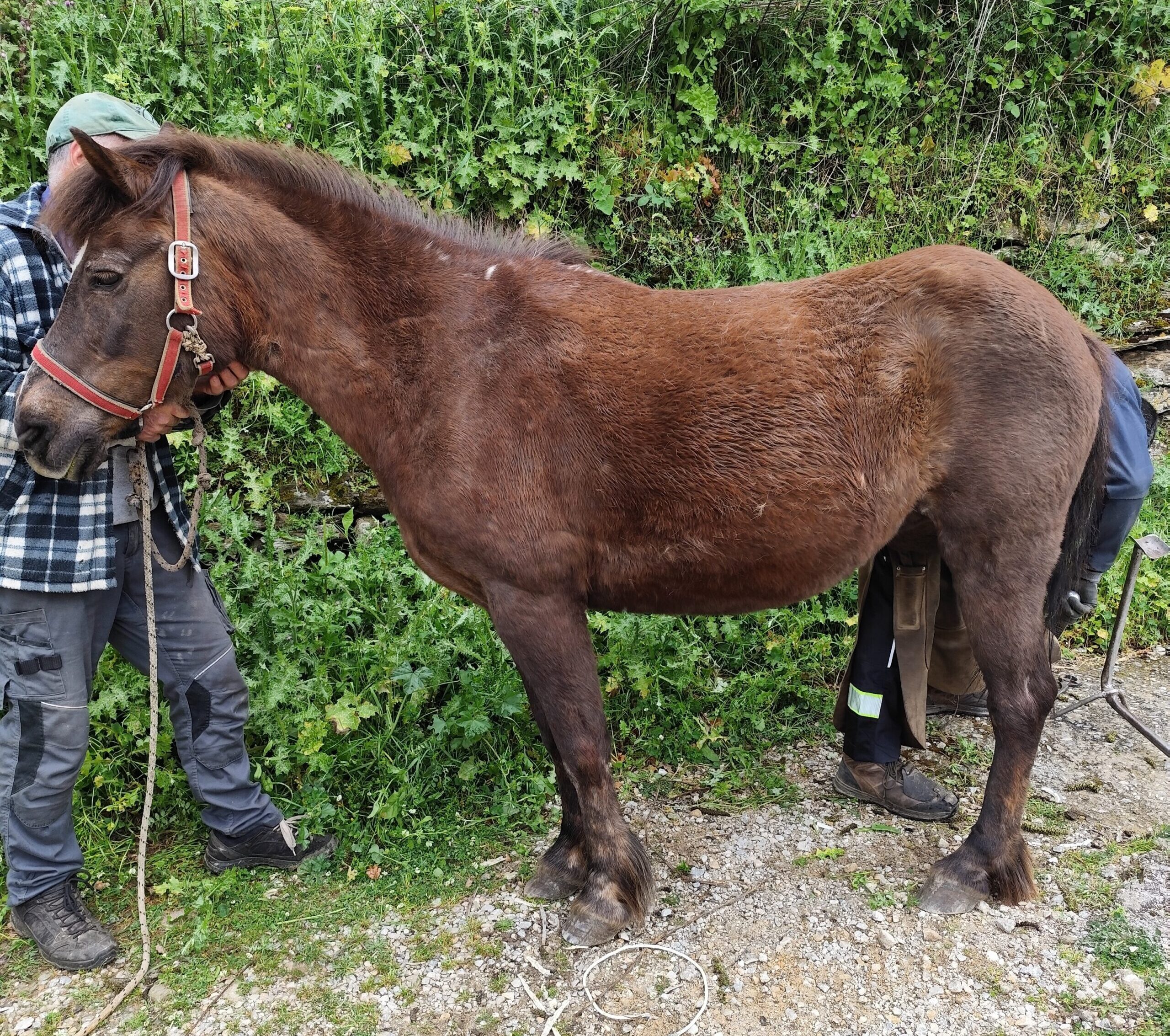
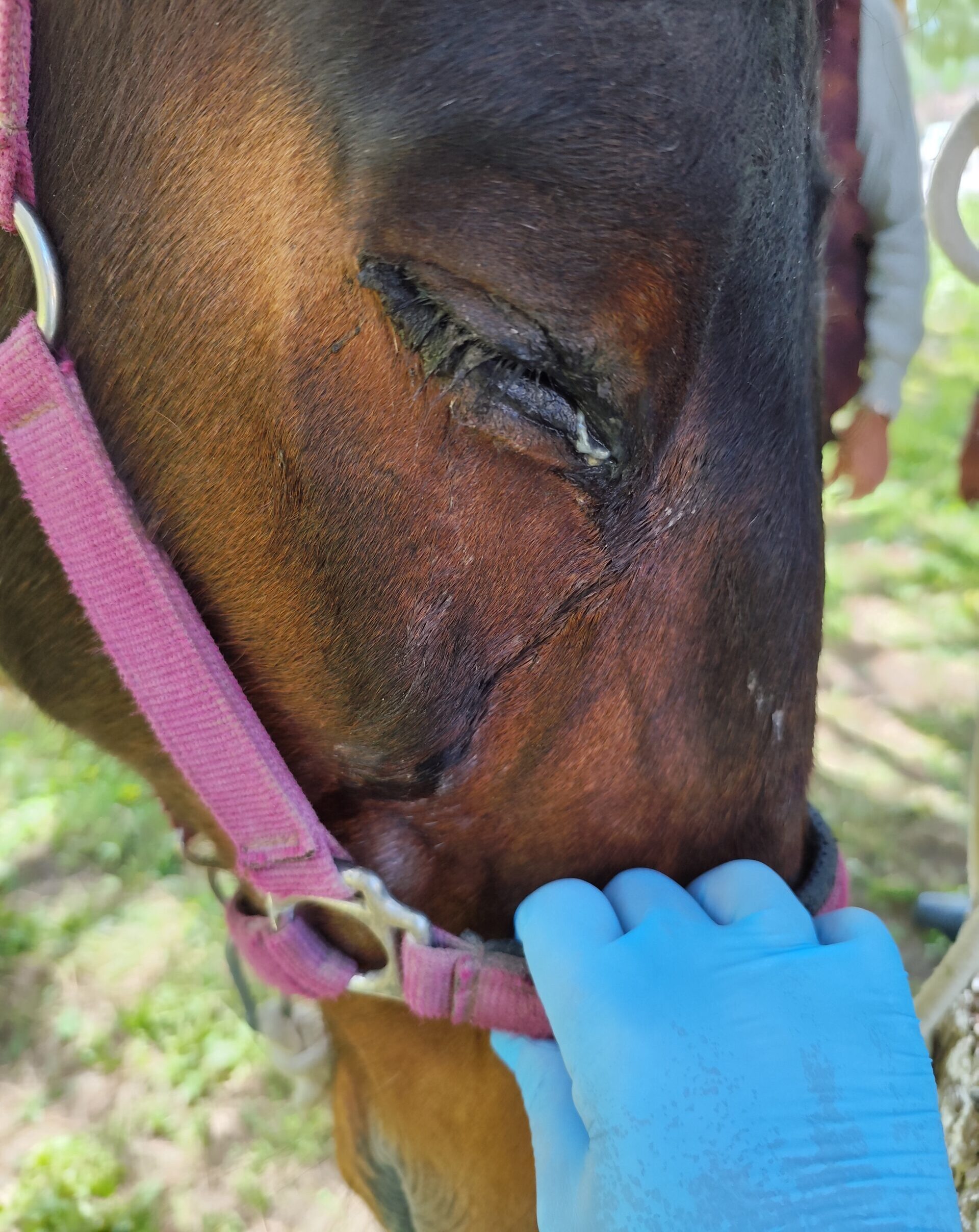
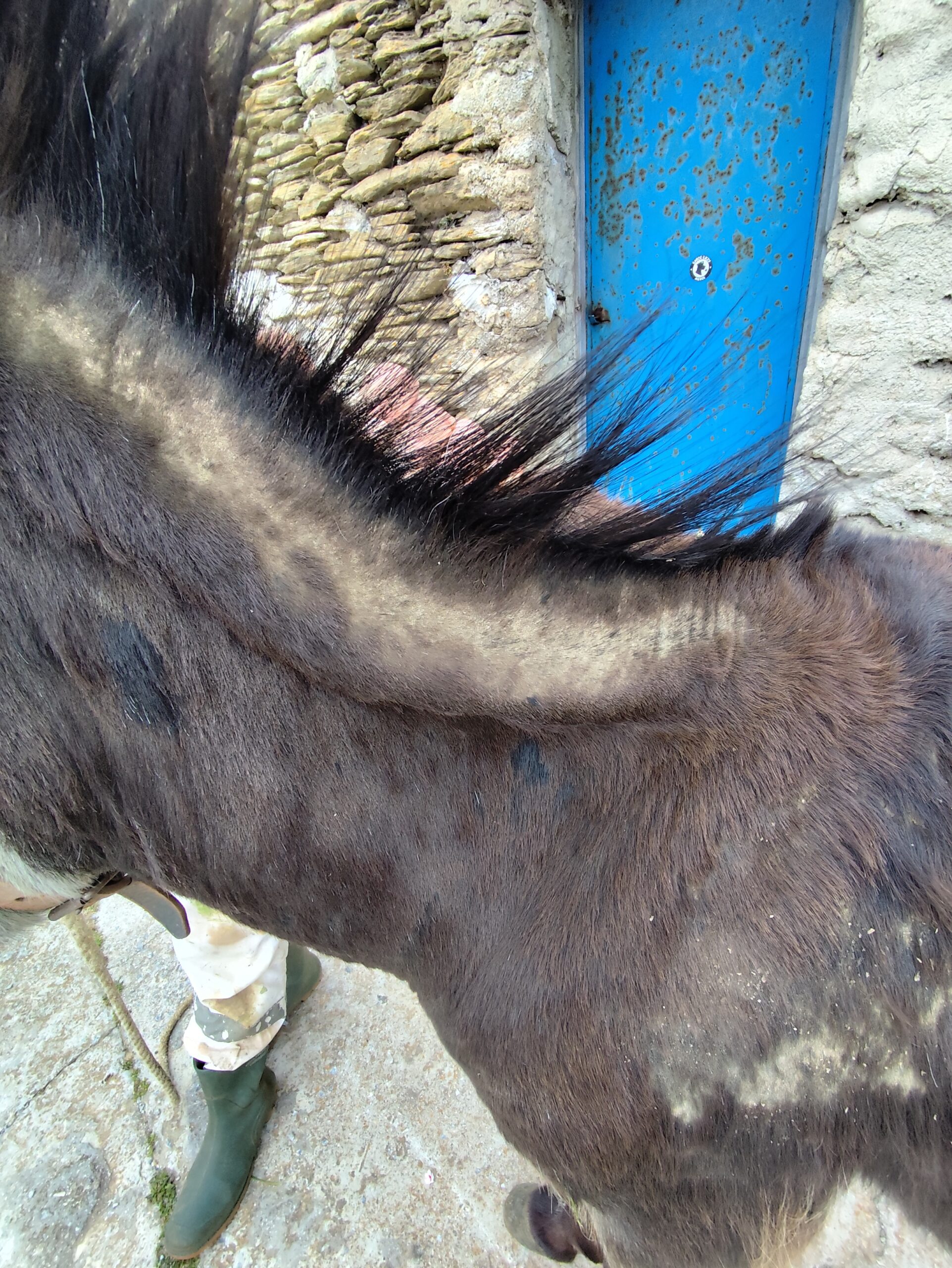
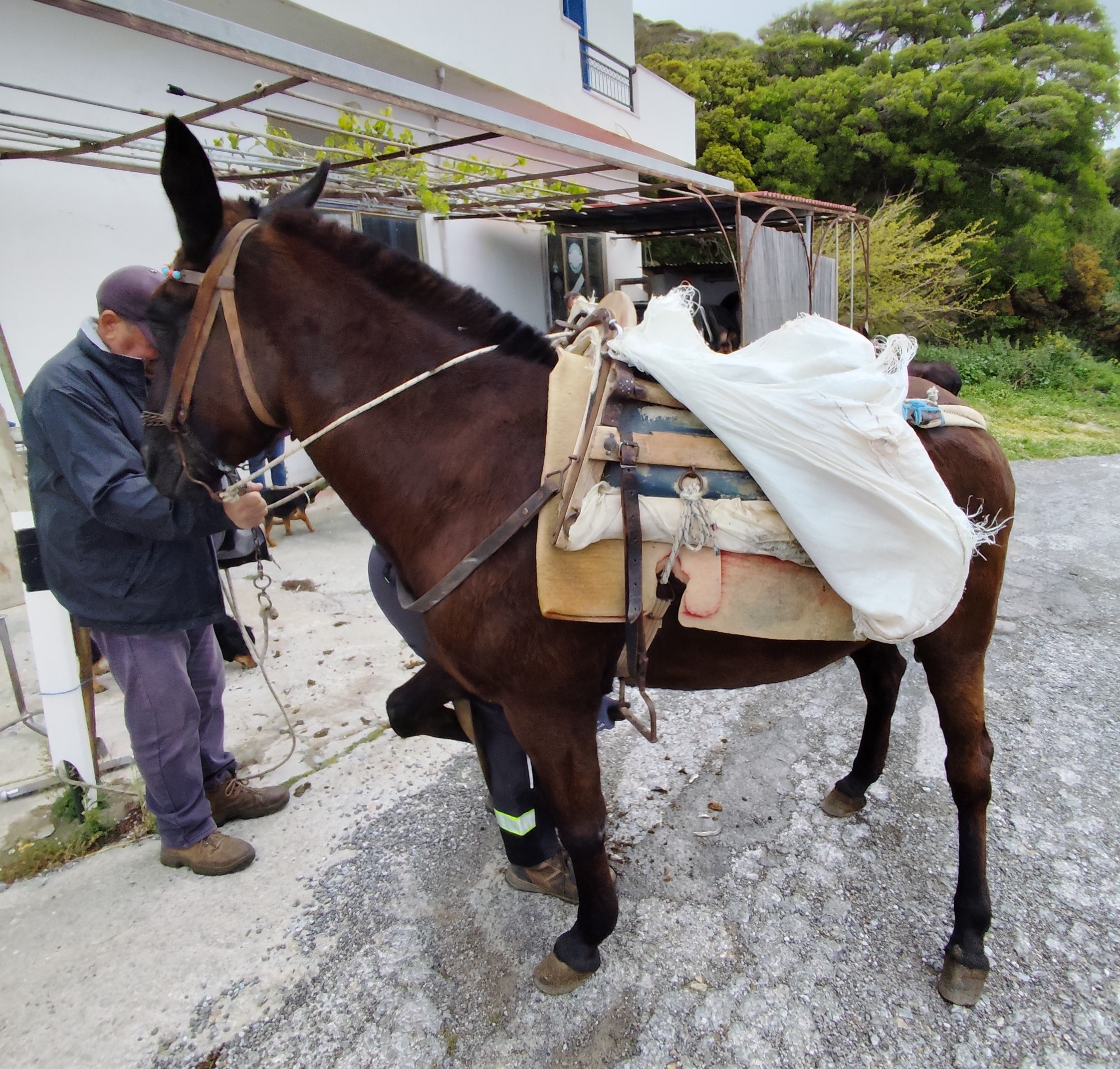
Most of the animals were found in good body condition, with only three underweight. A big percentage were found overweight though, the usual problem encountered in many places around Greece, as people adore feeding their animals as a way to express their care for them. Many of the animals treated this year were seen for the first time, therefore various health issues were encountered and their owners which were met for the first time required education and advice given to them for the first time. Five animals were found with injuries and lameness, one of them caused by accident from tethering. The incidence of injuries has dramatically gone down in our equine outreaches during the last decade, therefore this year’s incidence of injuries, even just five, was rather concerning. A few more veterinary issues were seen, such as chronic osteoarthritis, an eye injury, chronic lung problem in a retired horse and several skin problems caused by insects, such as sweet itch and fly bites.

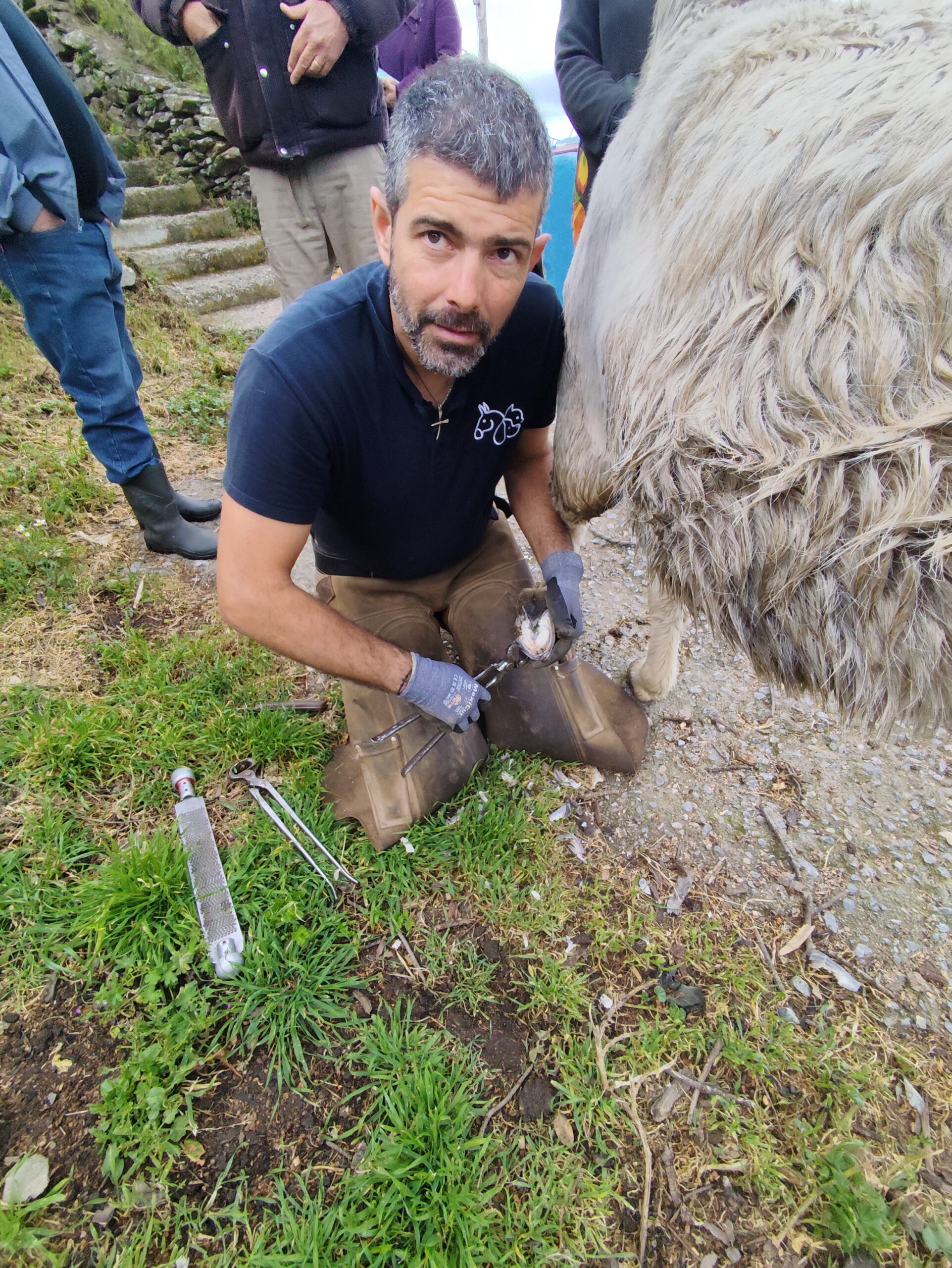
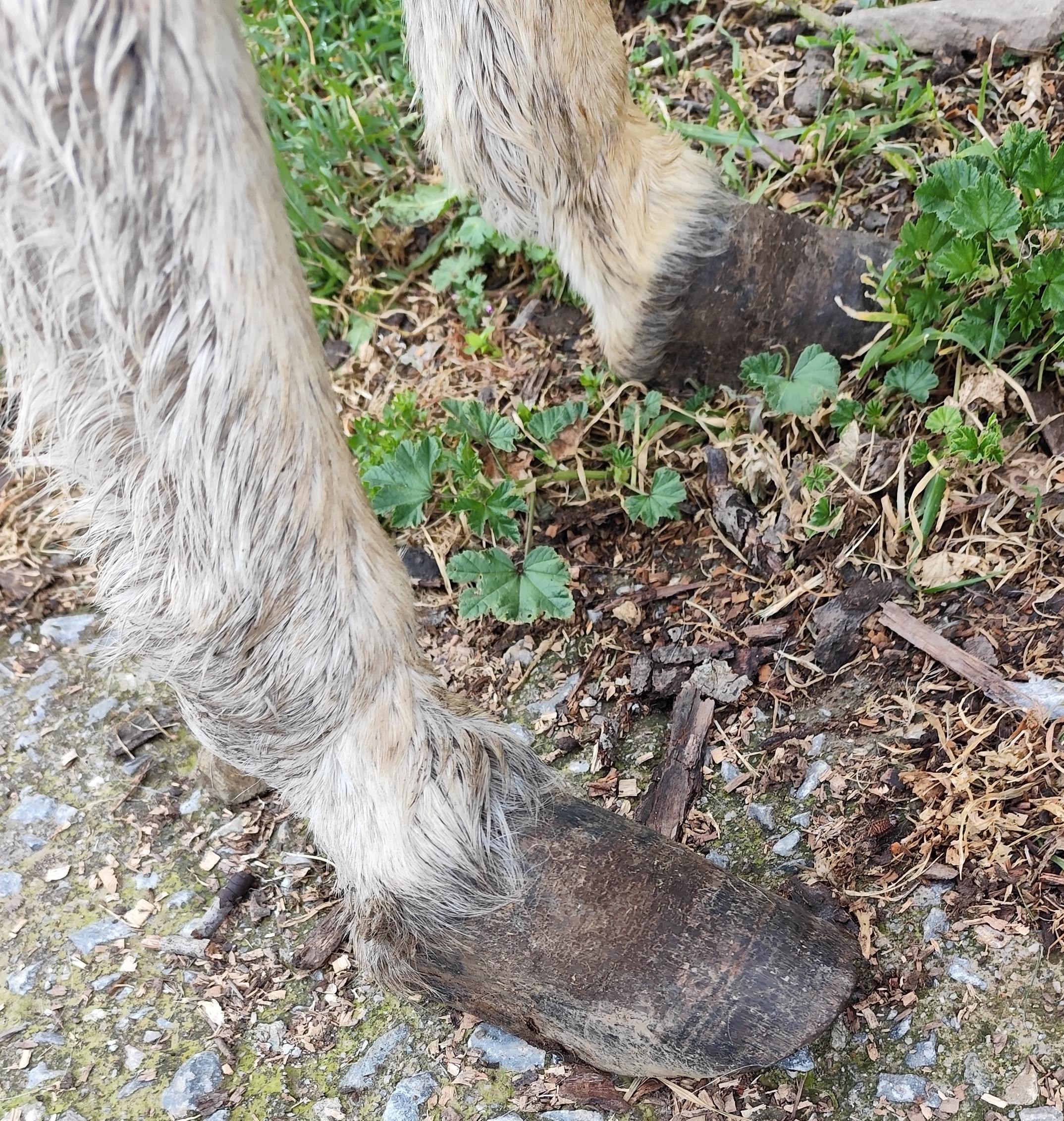
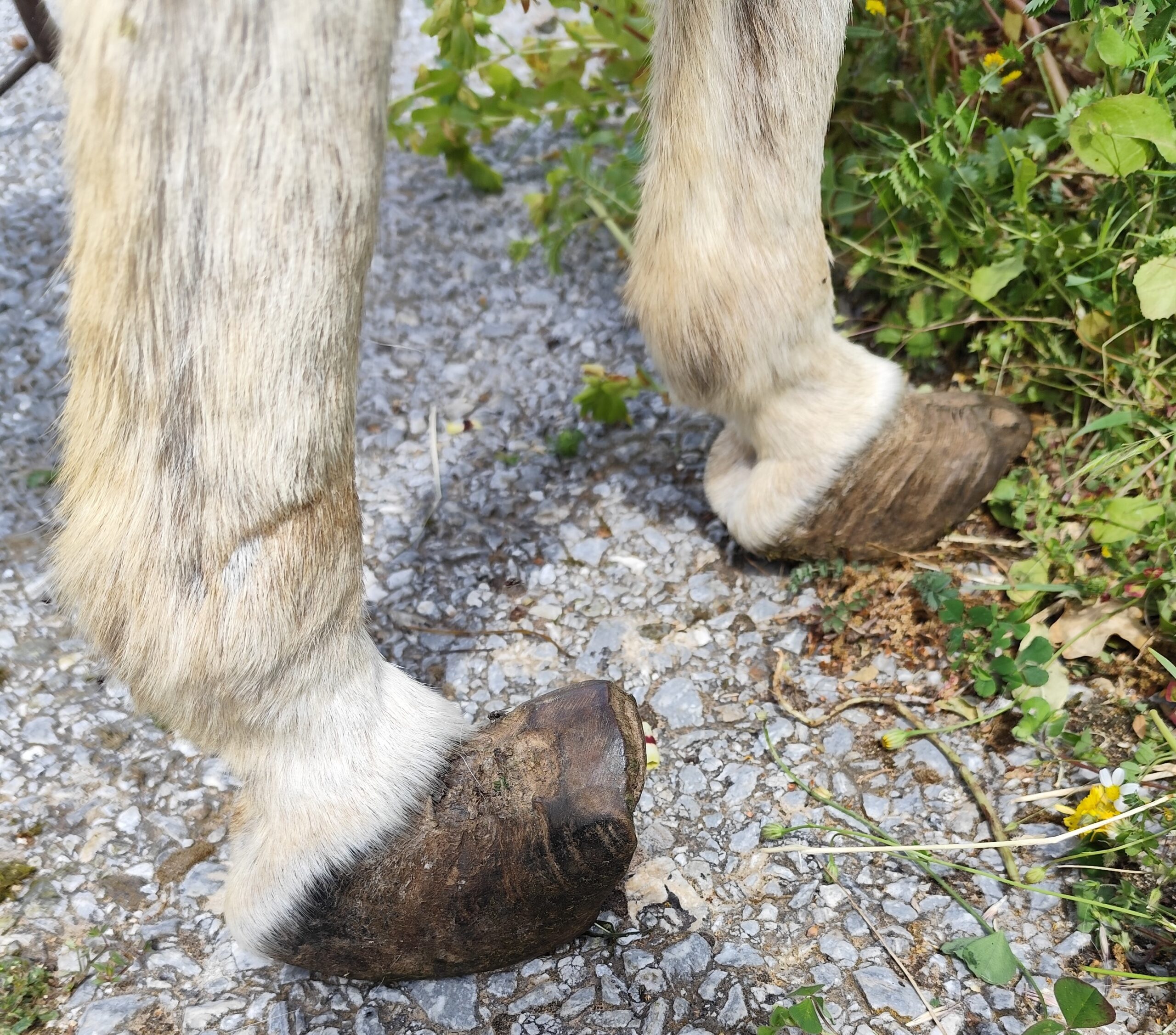
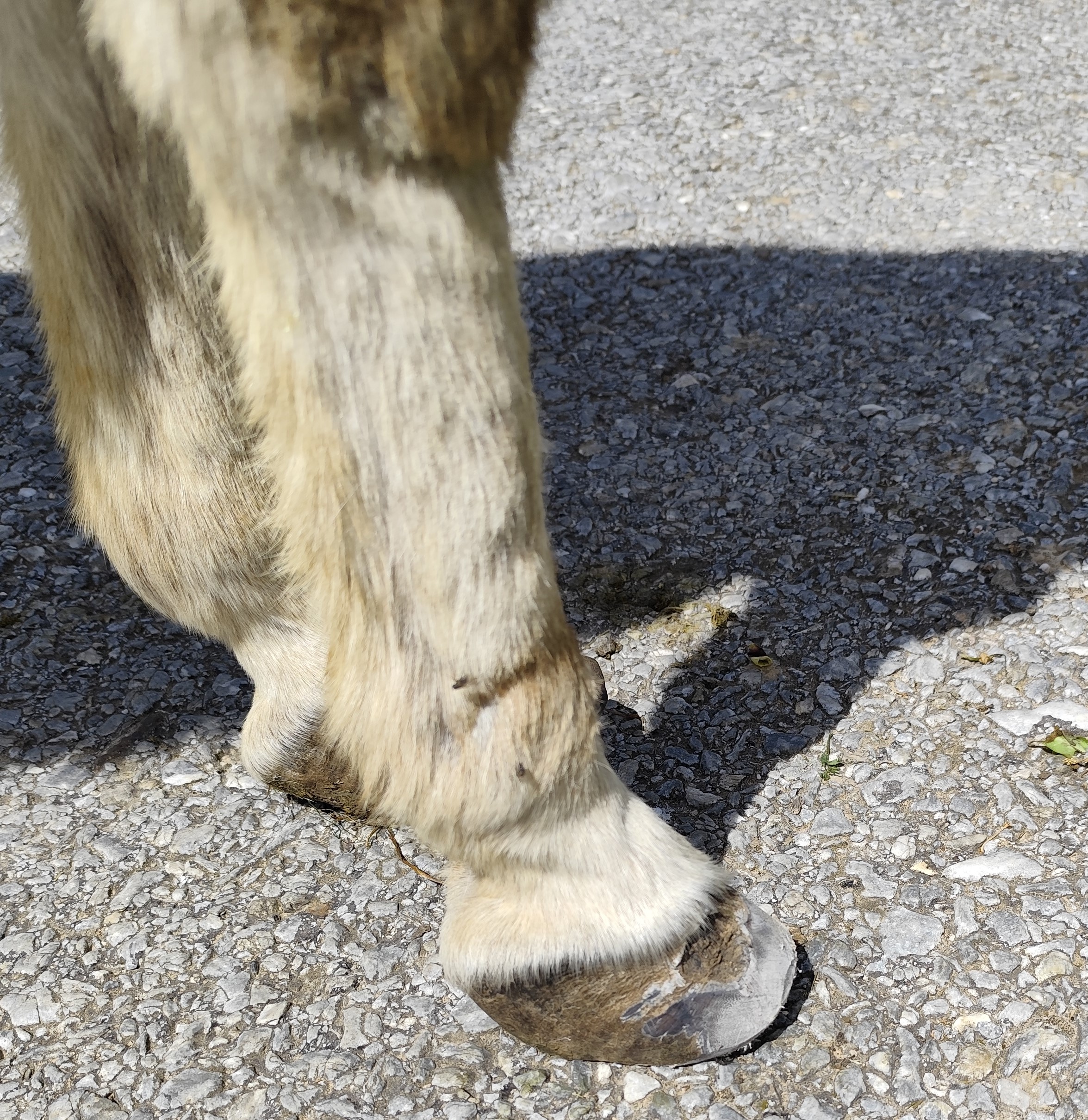
Regarding farriery services, this year almost all equines required hoof trimming. Thirty per cent of the equines had long hooves and 11 were found with overlong. Long hooves remain a serious problem on the island and apart from the imbalanced feeding, it is the result of animals not working so much anymore as they used to. The lack of a local amateur farrier who would be able to trim them a few more times per year, makes the problem more intense and the need for our outreach team more. Our team came across several cases of chronic laminitis with long hooves. Most of these animals hadn’t been treated in the past, therefore detailed advice on correct feeding was also needed.


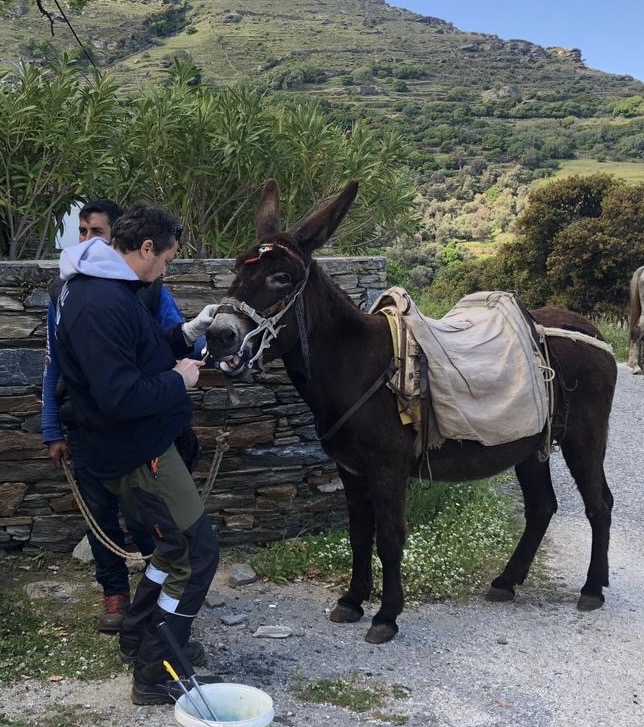
As far as dentistry is concerned, Alkis did mostly routine floating, sharp edges and a few hooks. In every trip there are risks that have to be assessed before treating each animal. One of the horses became defensive very quickly (rearing and sideward kicking with front legs), reminding us how important it is to recognize the early signs of discomfort before behaviour escalates. Sedation was not an option in its huge enclosure full with tall grasses. Animals displaying this type of behaviour cannot, therefore, be offered our team’s field services. If there is no serious health concern requiring immediate attention, owners are provided with advice on how to train their animals to become easier to handle. In such cases, any non-urgent treatments will need to be postponed until the following year.

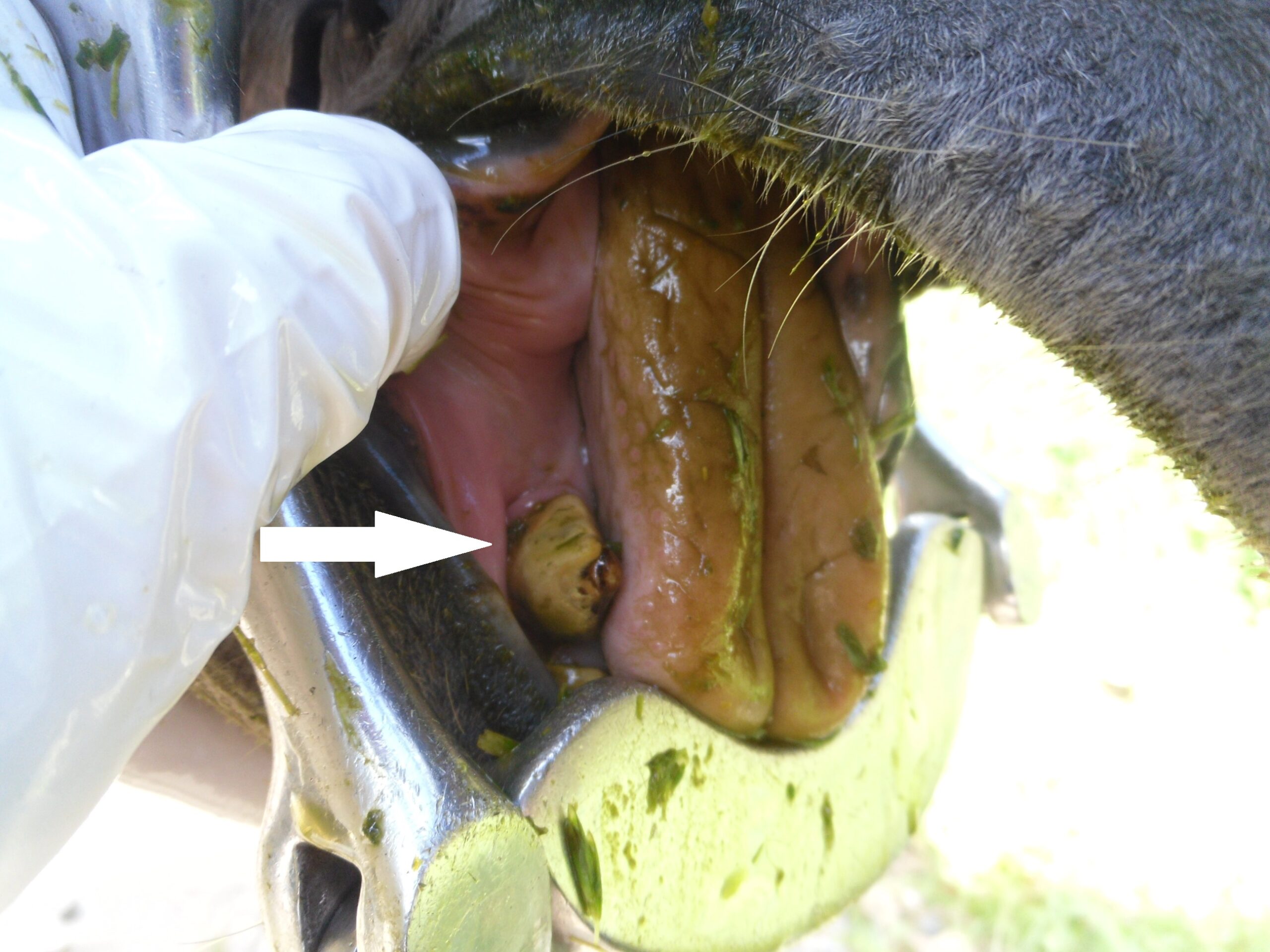
Most remarkable case with a positive outcome was that of a young adult donkey with an aberrant extra-long upper last molar. The extra part had developed into a hook hurting the cheek, because there is no opposite occlusal surface to trim it naturally. The hook was reduced to the desired level with motorized equipment: a difficult task requiring extra patience and alertness as the owner asked to try avoiding sedation. The jenny felt relieved immediately after the removal of the cause of pain, enjoying straight away a bite of grass to confirm that the oral pain was now gone forever.
It was a great relief for our EDT to manage to do routine floating on a male horse whose owner doesn’t wish to use sedation. This particular animal had been considered inapproachable regarding his mouth all the previous years, while a few years ago it had almost caused an accident. Despite time limitations, Alkis managed to “talk” the horse “into” accepting the rasp and dental treatment was successful. The owner’s positive change in temperament also played a role in the success, something that shows the importance of educating owners feeling relaxed next to their animals during treatments.

Apart from the individual working equines, the Magic Mountain, Sandy Britton’s rescue shelter for companion animals was visited once again this year, with our team offering valuable treatments to the equines she hosts in her place.
In an attempt to enhance equine identification and traceability in Greece, AAG promotes microchipping during outreaches. Only two microchips were placed this time, yet there is long way until all owners realise the benefit of equine identification and comply with the law.
The help of the local organisers of the island is invaluable, as without their help the outreach couldn’t take place; local volunteers Julia Joyce and Petros Vassiliadis organised the outreach – while being guided in the outreach’s needs by our vet Elisa Geskou, Coordinator of the Animal Action Greece Equine Care Programme – and guided the team from one animal to the other, all around the island. An extremely big thank you to the boat company Fast Ferries which offered for the fifth consecutive year, our team’s boat tickets to Andros. And a thank you to the boat company Golden Star Ferries who were happy too to offer the departure tickets when the boat company itinerary changed just unexpectedly just a few days before our team’s departure. We would also like to thank the Municipality of Andros for supporting our action every year, but also all the local businesses who contributed with their offers, facilitating our team’s stay on the island; Mr Moustakas for offering the accommodation so generously for the third consecutive year in Paradise Rooms & Apartments, the restaurants Belitsa and Almi in Batsi, the Riding Club of Andros for offering our team a meal in Chora and Mrs Tzioti Frantzeska in Ormos Korthiou, for her offer in fuel.
As Animal Action Greece is supported exclusively by donations from individuals, the Municipalities’ support, the sponsorships from local businesses and the donations from owners are extremely important to help the Equine Care Programme repeat its actions on the island annually. The involvement of each one mentioned above, demonstrates the local society’s sensitivity to animal welfare issues.