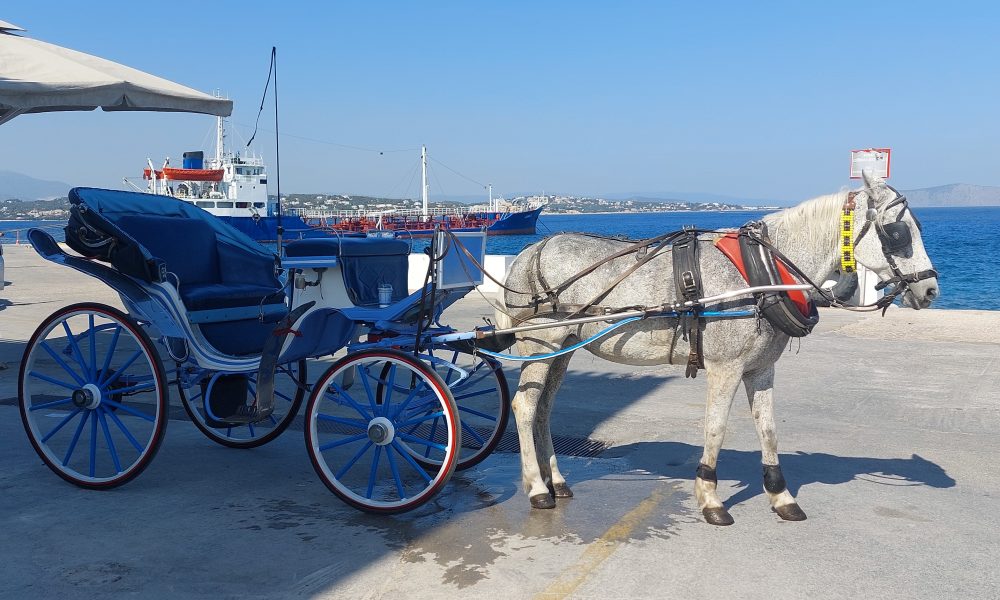
There has been a positive and long-awaited development for the welfare of horses used to pull carriages in Greece.
In December 2025, the Ministry of the Interior issued a new Ministerial Decision (65274/2025 – FEK number 6947/Β/22-12-2025) updating the legal framework for animal-drawn vehicles, replacing older and outdated regulations that had been in place for many years.
The updated rules introduce clearer licensing, inspections, and specific equine welfare protections, important steps towards better oversight and accountability for working horses, representing meaningful progress for equine protection at a legislative level.
What the new decision introduces
The revised framework includes several key improvements compared to the previous law:
- Time-limited permits rather than indefinite permissions
- Unified and standardised licensing
- Mandatory inspections by Municipal Police Service, Traffic Police Department and Veterinary services
- Oversight and responsibility at Municipal level
- Identification requirements (including electronic identification of horses)
- Age limits for working animals
- Extreme temperature protections
- Declaration of suitable stabling area for equines, in compliance with animal health and hygiene requirements
- Exclusion of individuals with animal abuse or cruelty convictions from operating licences
- Mandatory effective breaking system for the carriage
Together, these measures create clearer standards for both operators and authorities, helping ensure that welfare is considered as part of everyday practice rather than left to chance.
Why this matters for horses
Carriage horses often work in busy towns and tourist areas, sometimes in hot weather and challenging urban environments.
Without strong regulation, it can be difficult to safeguard essentials such as:
- rest periods
- access to shade and water
- appropriate workloads
- regular health checks
- safe harnessing and equipment
- and protection from exploitation or neglect
Clear, enforceable rules make it easier for authorities to intervene when standards aren’t met, and easier for responsible operators to do the right thing.
In short, structure and oversight help translate good intentions into real-world protection.
A positive first step for equine legislation
At Animal Action Greece, we believe that improving animal welfare requires both hands-on care and stronger systems.
Our work focuses on practical veterinary outreach, owner guidance, and support for working equines across Greece. Alongside this, the development of clearer legislation is essential to address wider gaps in protection.
This Ministerial Decision is therefore encouraging to see, not as a complete solution, but as a constructive first step towards a more comprehensive equine welfare framework nationally.
Progress often happens gradually. Updates like this help lay the foundation for better standards and stronger protections in the future.
Looking ahead
As with any legislation, the real impact will depend on implementation and enforcement at local level.
But the introduction of unified licensing, inspections, and defined welfare safeguards signals that working equines are increasingly being recognised within policy and law.
That recognition matters.
We welcome developments that strengthen protections for horses, donkeys and mules and will continue supporting equines across Greece through veterinary care, education and welfare outreach. Because every working animal deserves safety, dignity, and proper care.