The beginning of each year is usually free from outreach visits due to cold and unstable weather conditions. This year, however, the first two months proved even more challenging than usual, with persistent rain and unpredictable weather across Greece, making it impossible to carry out any outreach activities.
The Equine Care Programme’s first outreach trip of 2026 took place on the 3rd and 4th of March on the well-known volcanic island of Santorini, following an urgent request for assistance from the Santorini Animal Welfare Association shelter. Our team’s interventions came at a critical time and proved invaluable in maintaining proper hoof and dental health for 21 elderly equines.
After having postponed the trip for several weeks due to health issues, our equine team—consisting of farrier Tasos and equine dental technician Alkis—visited SAWA. During this visit, there were several new arrivals at the shelter, while, sadly, a few old “friends” had passed away. The previous year had been marked by a series of consecutive local earthquakes, widely reported in international media; however, life on the island has since returned to normal. Travelling to a quiet, uncrowded Santorini at this time of year was a unique experience, reminiscent of earlier times.
The people of SAWA take excellent care of their rescued animals. In addition to equines, other domestic species—including dogs and ducks—also find refuge there, with perhaps the most unusual residents being a pair of ostriches. Christina and Dave are present at the sanctuary every day, dedicating themselves fully to the care of the animals and the continuous improvement of facilities and overall welfare. Volunteers frequently join them throughout the year, contributing to this demanding but rewarding work.
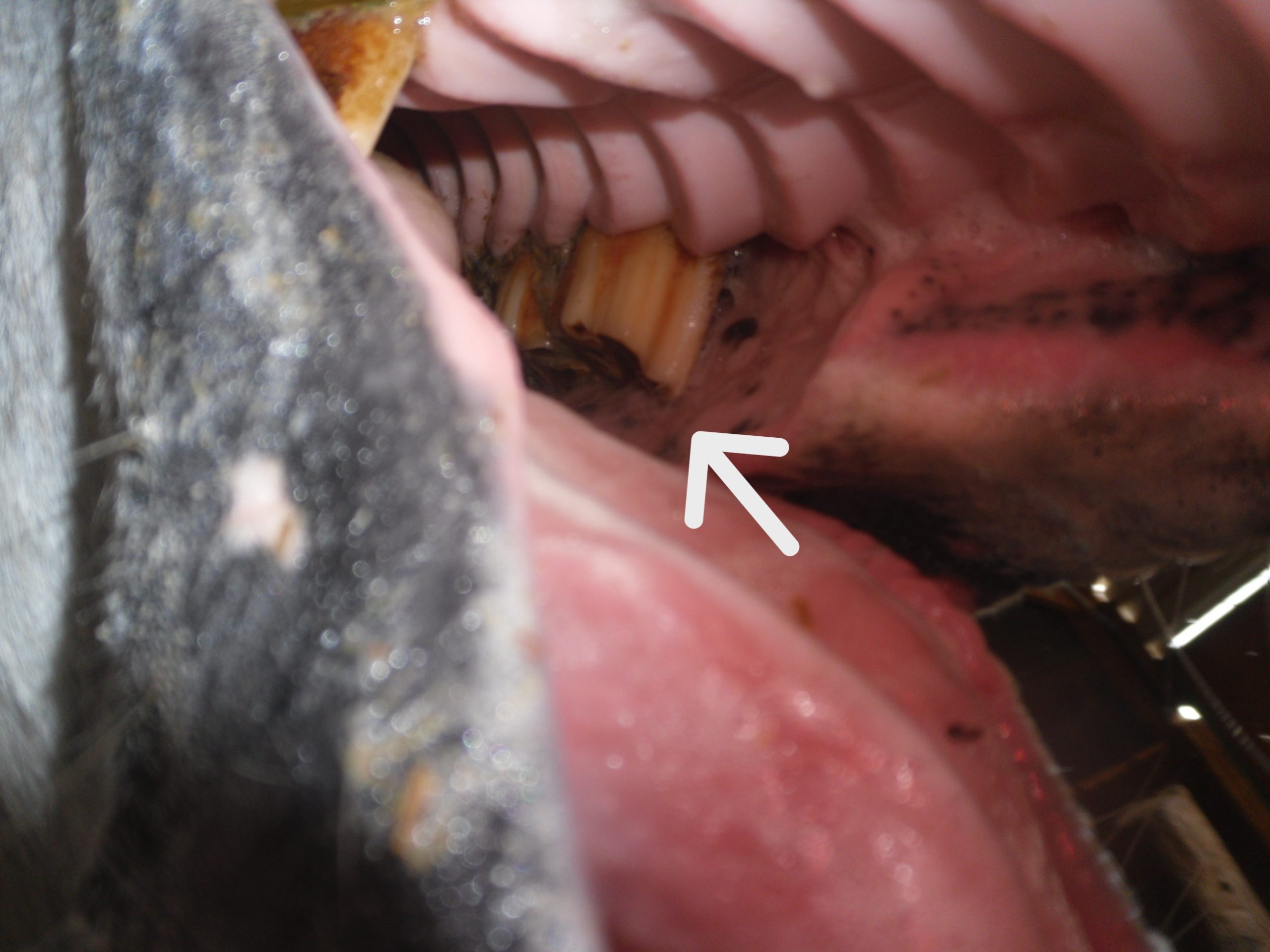
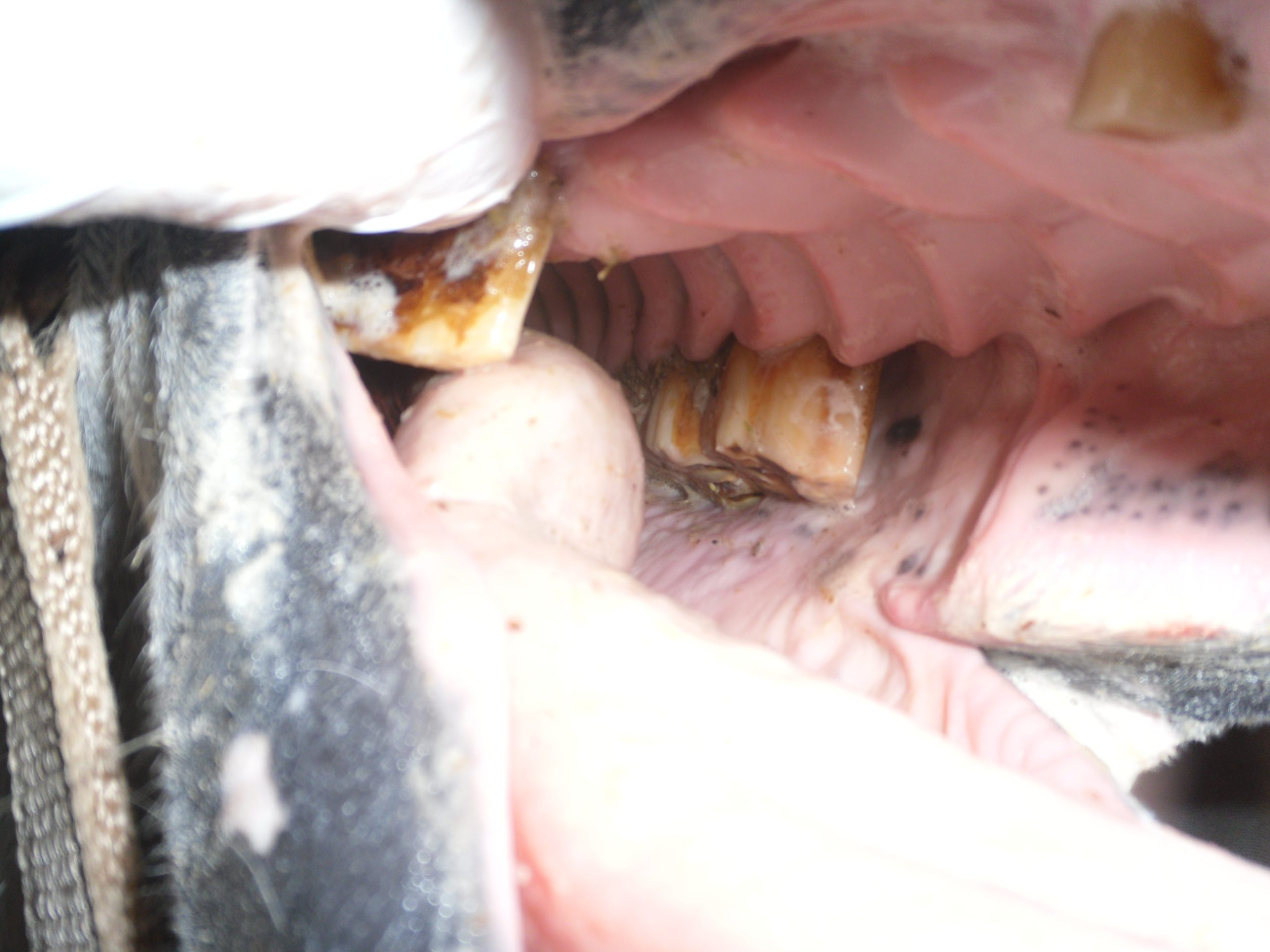
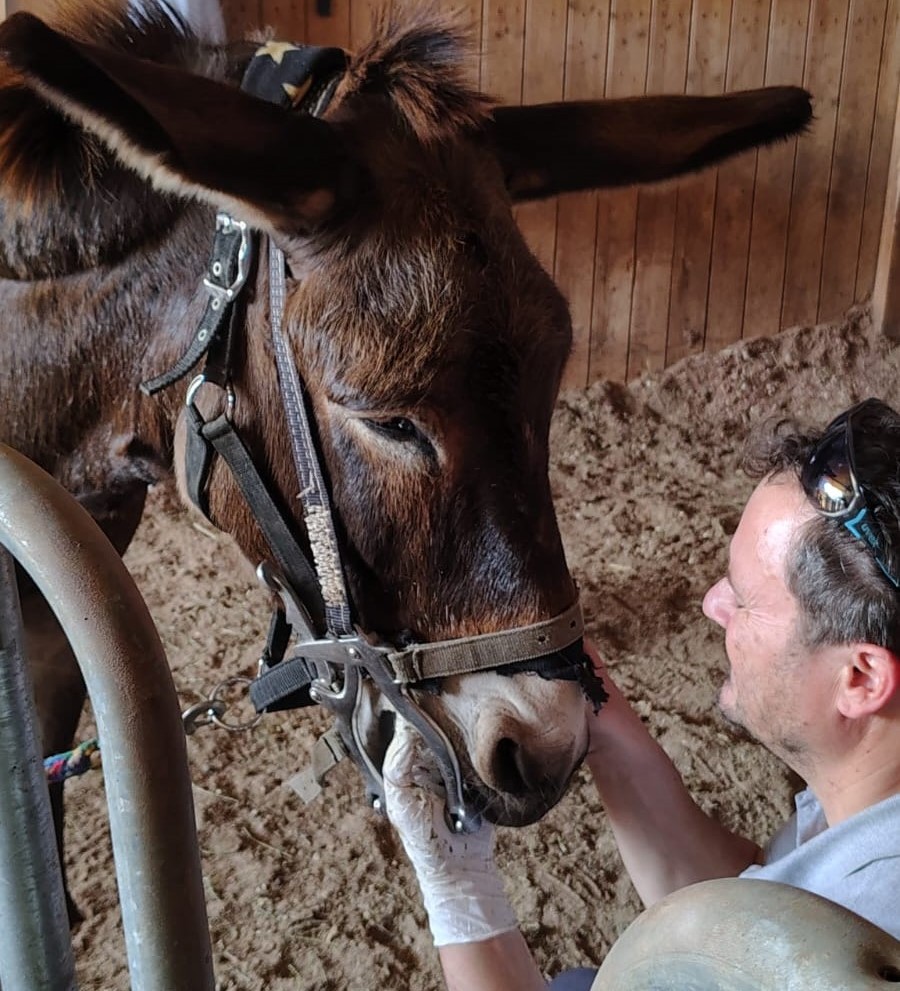
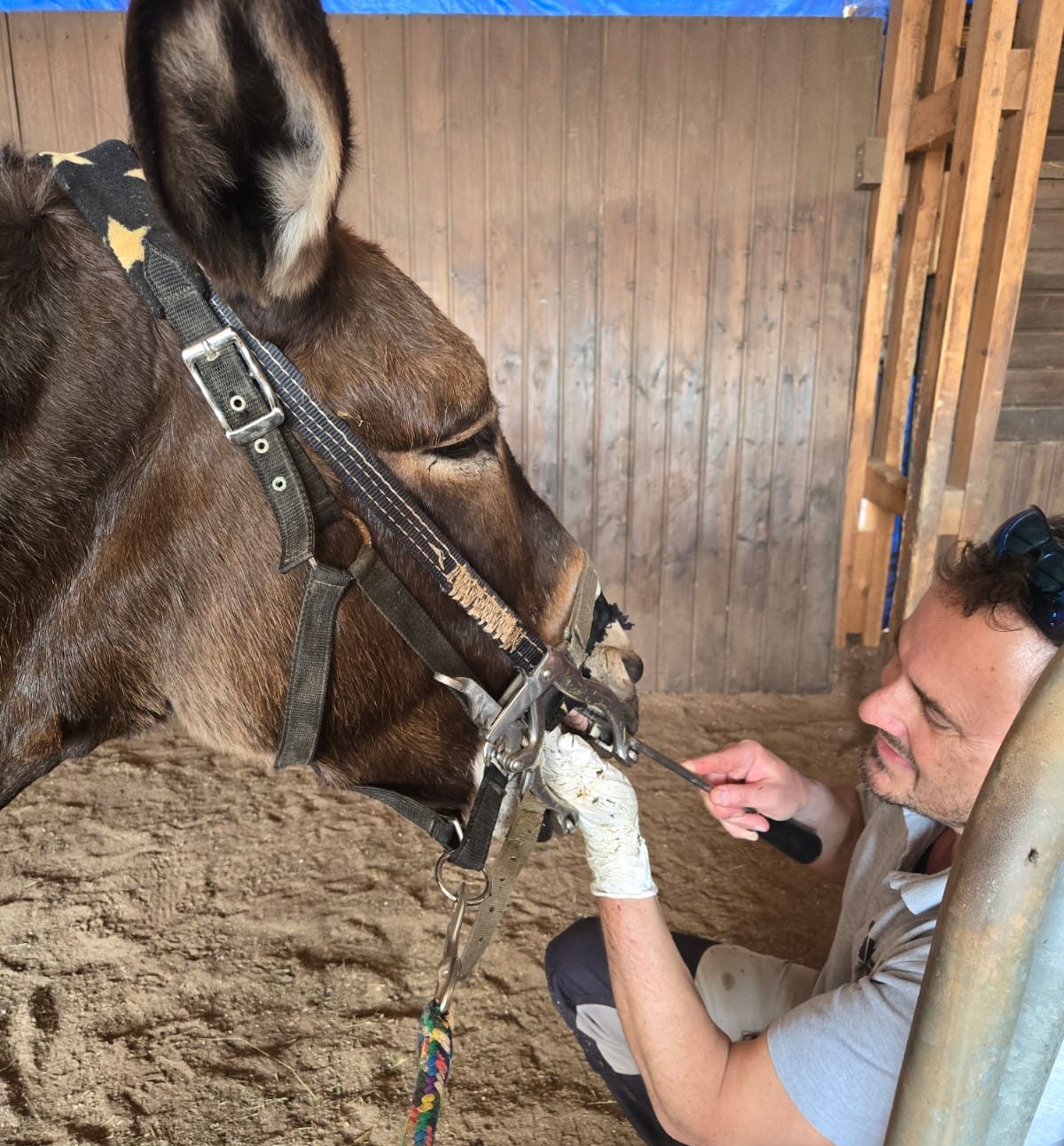
Alkis assessed the majority of the animals’ teeth, typically requiring only routine floating. More complex procedures involved addressing large hooks, step teeth and ramps using motorised equipment. These issues were observed in newly arrived mules and donkeys with unknown histories—animals that had possibly never received dental care before. A white female mule was particularly wary due to blindness in one eye, nevertheless Alkis’ calmness reassured her to stay patient. Another white gelding mule initially showed fear of the gag, but remained calm and cooperative with Dave by his side, allowing Alkis to complete the necessary work of filing down two big dental hooks.
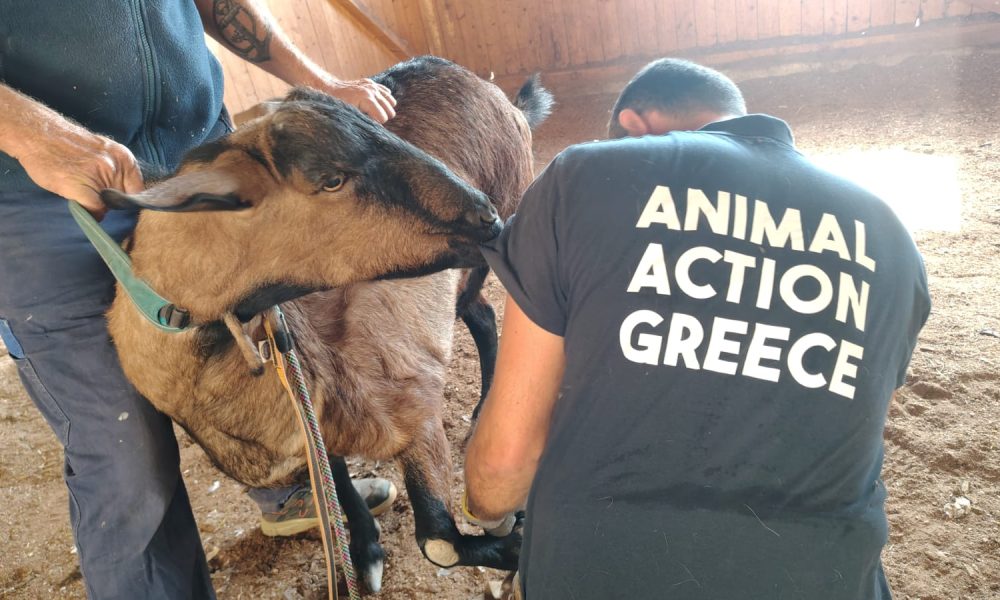
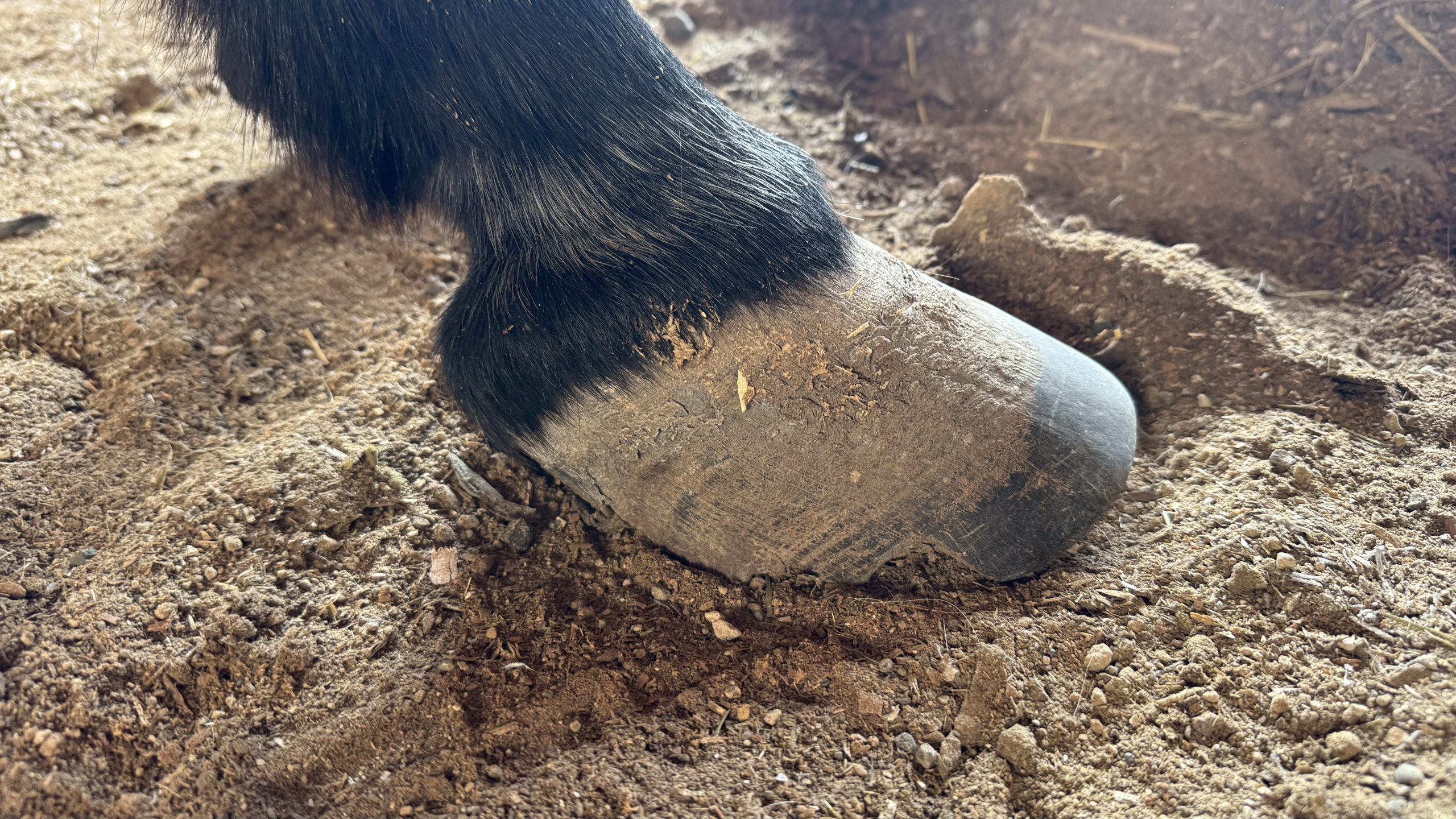
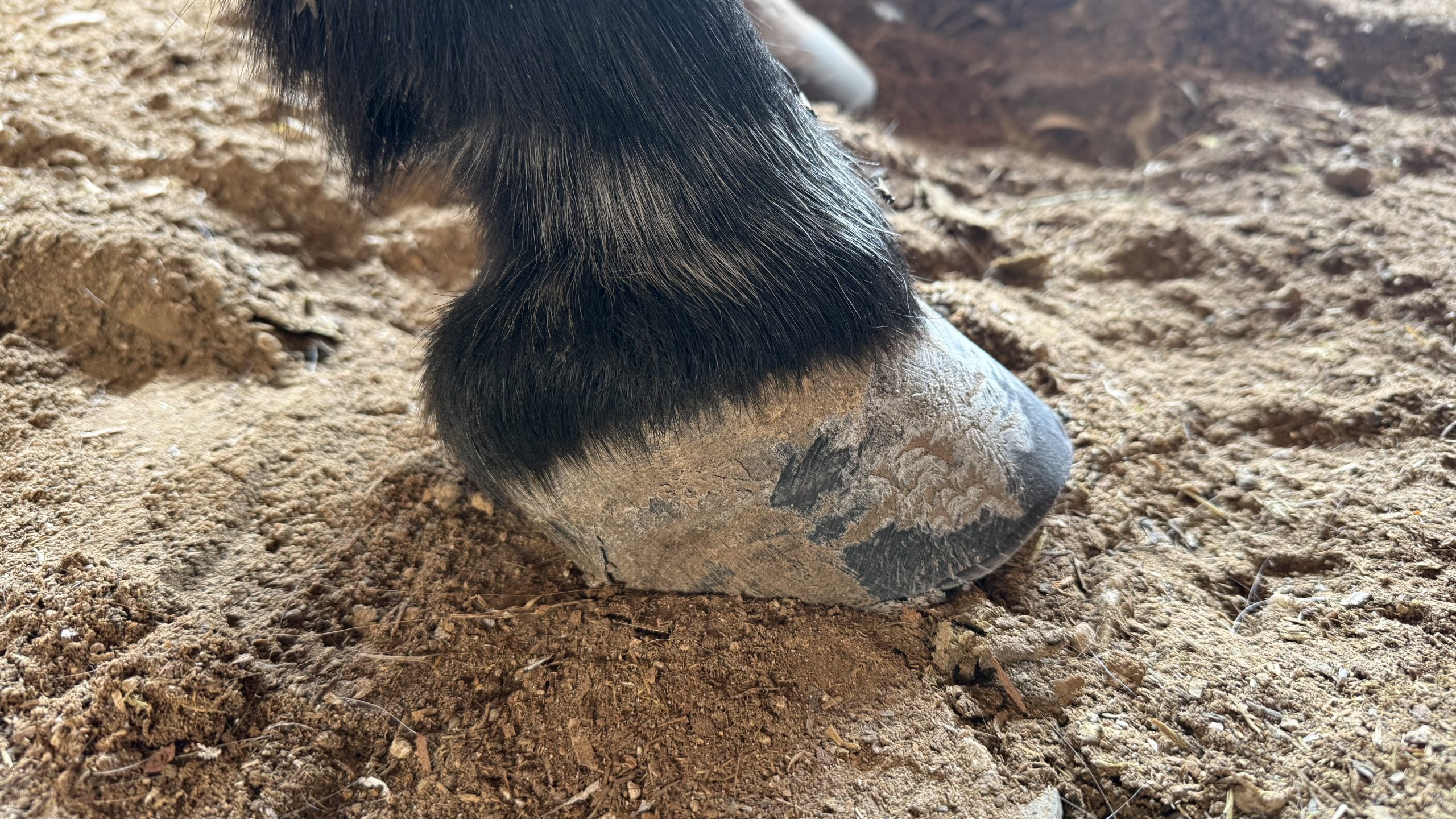
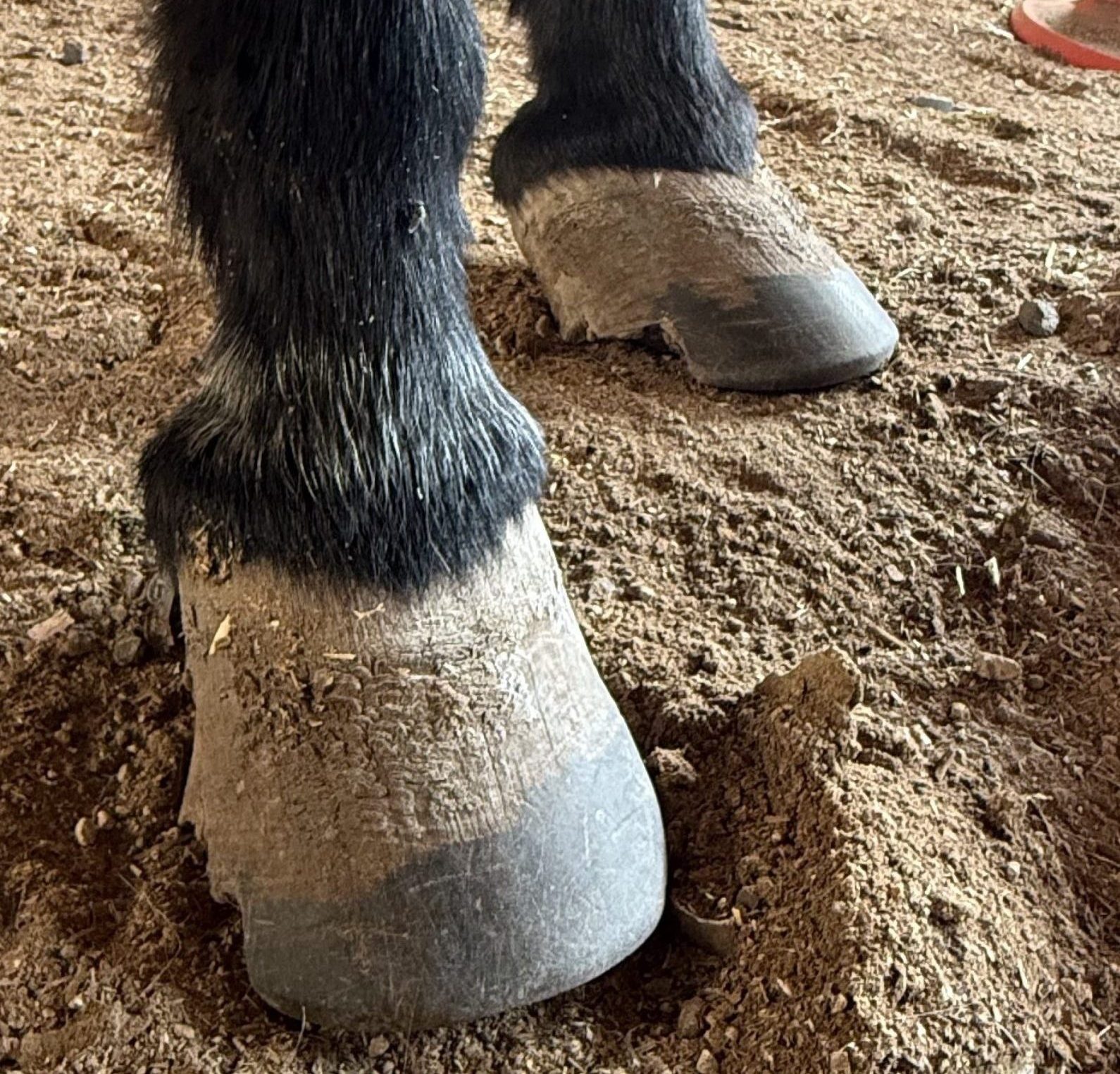
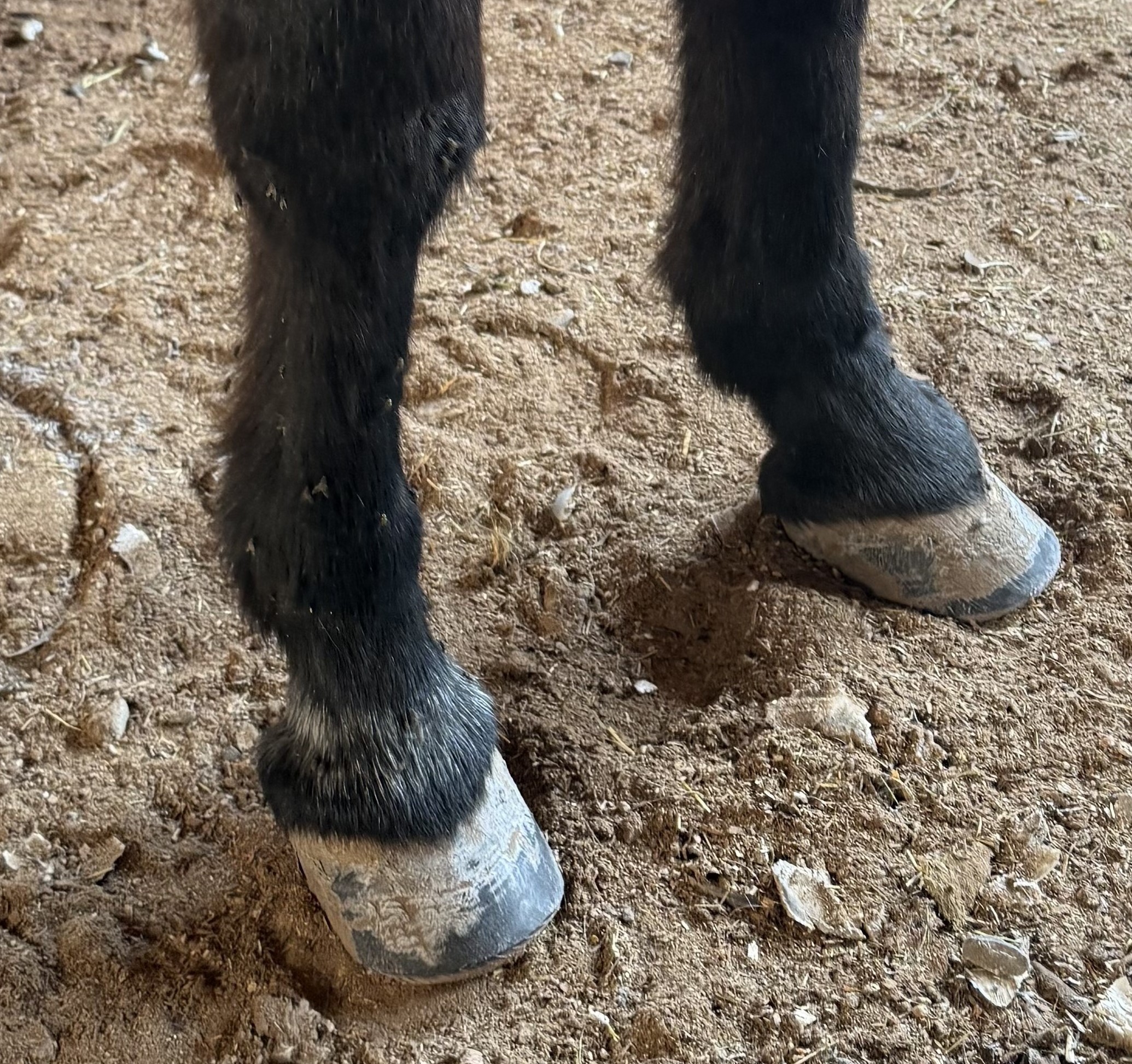
Tasos carried out hoof trimming on all animals requiring rebalancing and removal of excess growth. Many of the equines suffer from chronic laminitis, making regular hoof care essential. The shelter’s goats also benefited from our farrier’s hoof trimming; Sinatra, the mischievous billy goat, showed a particular enthusiasm after his hoof treatment, for sampling the handwritten notes—apparently finding them far more appetising than his own food!
While the retired equines enjoy a safe and caring environment at the SAWA shelter, there has been a gradual decrease in the number of working mules and donkeys on the steps of Fira, largely in response to global concern and negative publicity surrounding their working conditions. A new and growing concern is the increasing number of riding horses brought to the island by inexperienced owners seeking to capitalise on tourist demand for photo opportunities and social media attention. During the summer season, these horses are required to carry inexperienced riders for hours under the intense sun across the island’s rocky terrain. In contrast, during the winter months, many are left to roam freely and unattended, with little to no care. Tourists who voice concern over the working mules may not realise that these riding horses often face even harsher conditions and, in many cases, minimal welfare provision.
We would like to extend our sincere thanks to the sanctuary carers for their generous hospitality, including accommodation, transportation and meals provided to our team during their stay.
Animal Action Greece is grateful to the dedicated team from SAWA for their care of these truly affectionate animals and will continue to stand by them with support and professional expertise.