
In June 22 and 23, 2026, the Animal Action Greece equine care team completed their 13th annual visit to Amorgos, providing essential veterinary, dental and farriery care to the island’s working equines.
Veterinarian Kostas, equine dental technician Alkis and farrier Tasos offered their services to 45 equines (30 donkeys, 8 mules, and 7 horses) that are used for various agricultural and transport tasks across the island.
Amorgos stands out for its unique natural environment, characterized by rugged landscapes, crystal-clear waters, and rich biodiversity. Working equines, mainly donkeys and mules, are an important part of the island’s local heritage and continue to play a valuable role in transportation and agricultural activities, particularly in remote and hard-to-reach areas of the island.
This year, the Equine Care Team visited Katapola, Lagada, Tholaria, Ormos, Potamos, Chora, and Vroutsi, a village the team had not visited for several years. As they do every year, equine owners across Amorgos eagerly awaited the team’s visit, bringing their animals for their annual care while listening carefully to the team’s advice and recommendations.


Essential health treatments
The equines were generally in good nutritional condition and overall health. Due to the season and the high temperatures, many animals showed signs of insect hypersensitivity, which were appropriately treated by the team’s veterinarian. Horseflies and stable flies were found on several animals, which were treated with topical antiparasitic products. Special attention and guidance were also provided for donkeys that are particularly sensitive to fly bites on their legs, a condition that can lead to hair loss followed by the development of skin wounds. Owners received advice on the importance of regular vaccination, deworming, the use of insect repellents during the summer months, proper nutrition, and overall animal care.
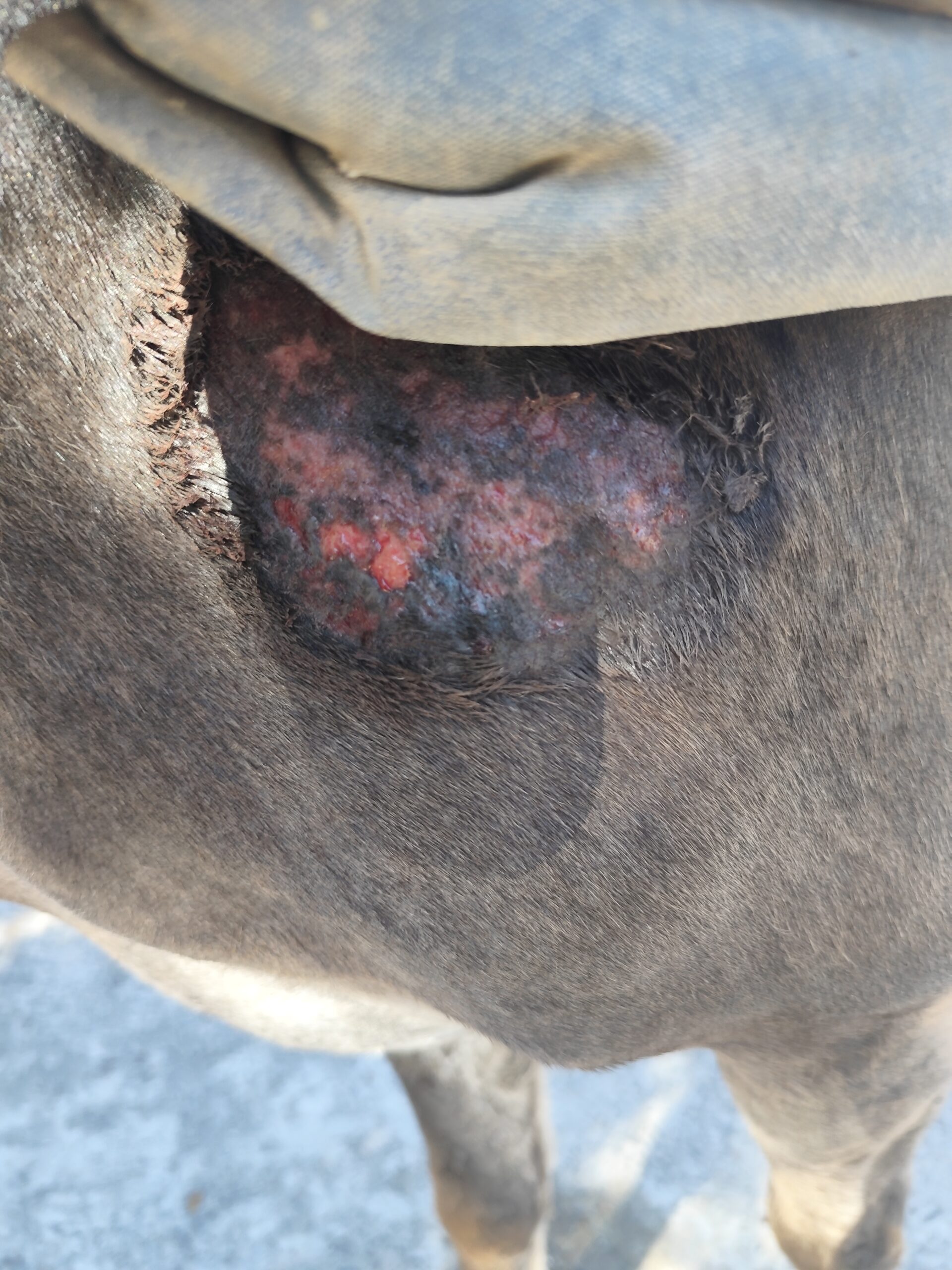
Several minor injuries were identified and treated. The more serious cases included a fairly extensive saddle sore on the shoulder of a donkey caused by an ill-fitting pack saddle and a wound on the lateral aspect of the metacarpus of a two-month-old foal. The foal had sustained the injury only the day before the team’s arrival, and was fortunate to be seen by the team veterinarian and receive prompt treatment. Owners were provided with instructions for the continued care and management of these injuries.
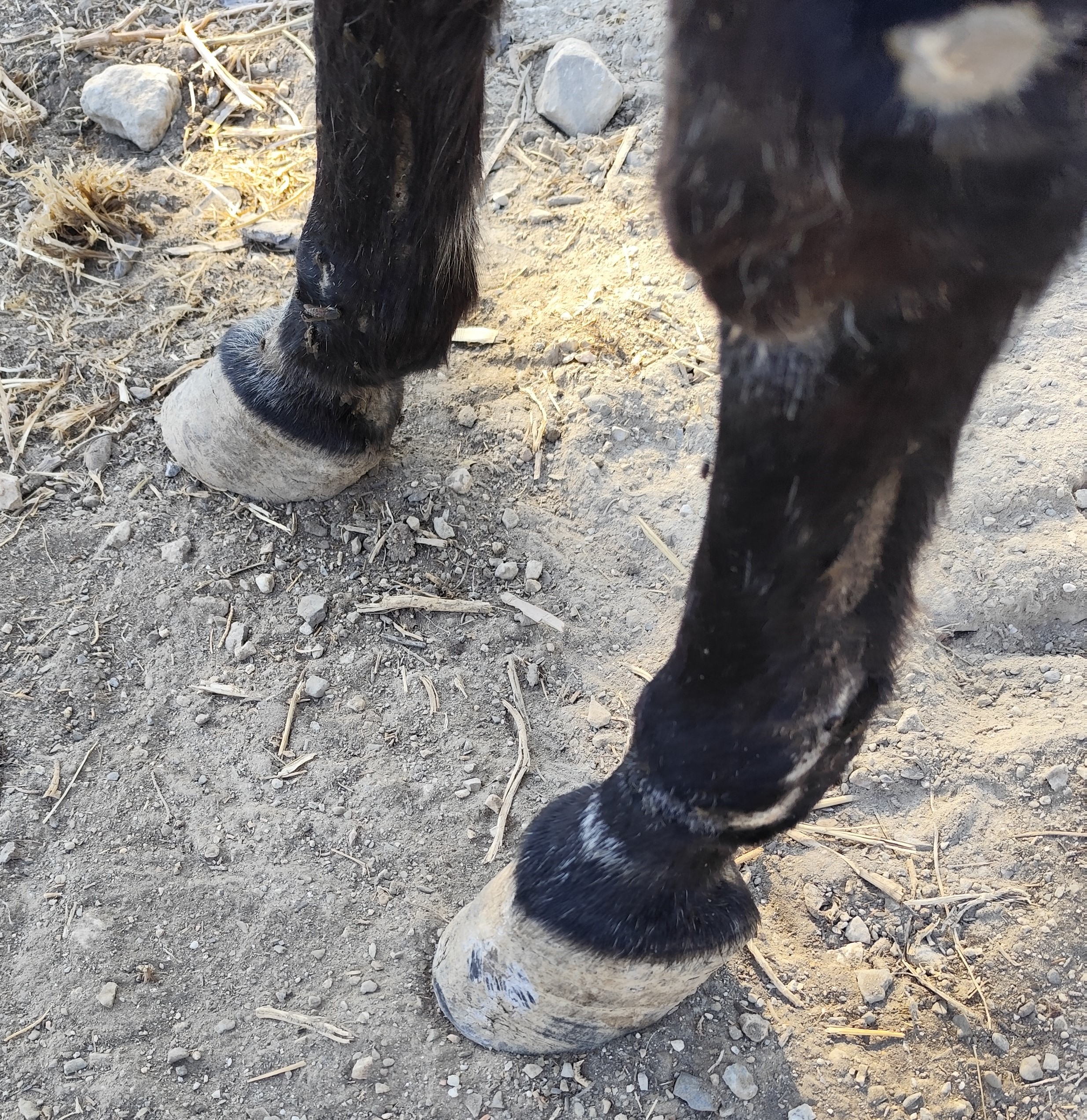
Tasos trimmed the hooves of most of the animals. Some cases involved overgrown hooves resulting from chronic laminitis, requiring additional time and careful attention during trimming. He also carried out meticulous hoof trimming on a hoof that had become deformed following an old abscess, as well as on hind hooves that had begun to develop the characteristic shape associated with ballerina syndrome. Kostas advised the owners on appropriate feeding practices to help prevent future episodes of laminitis and maintain healthy hoof condition.

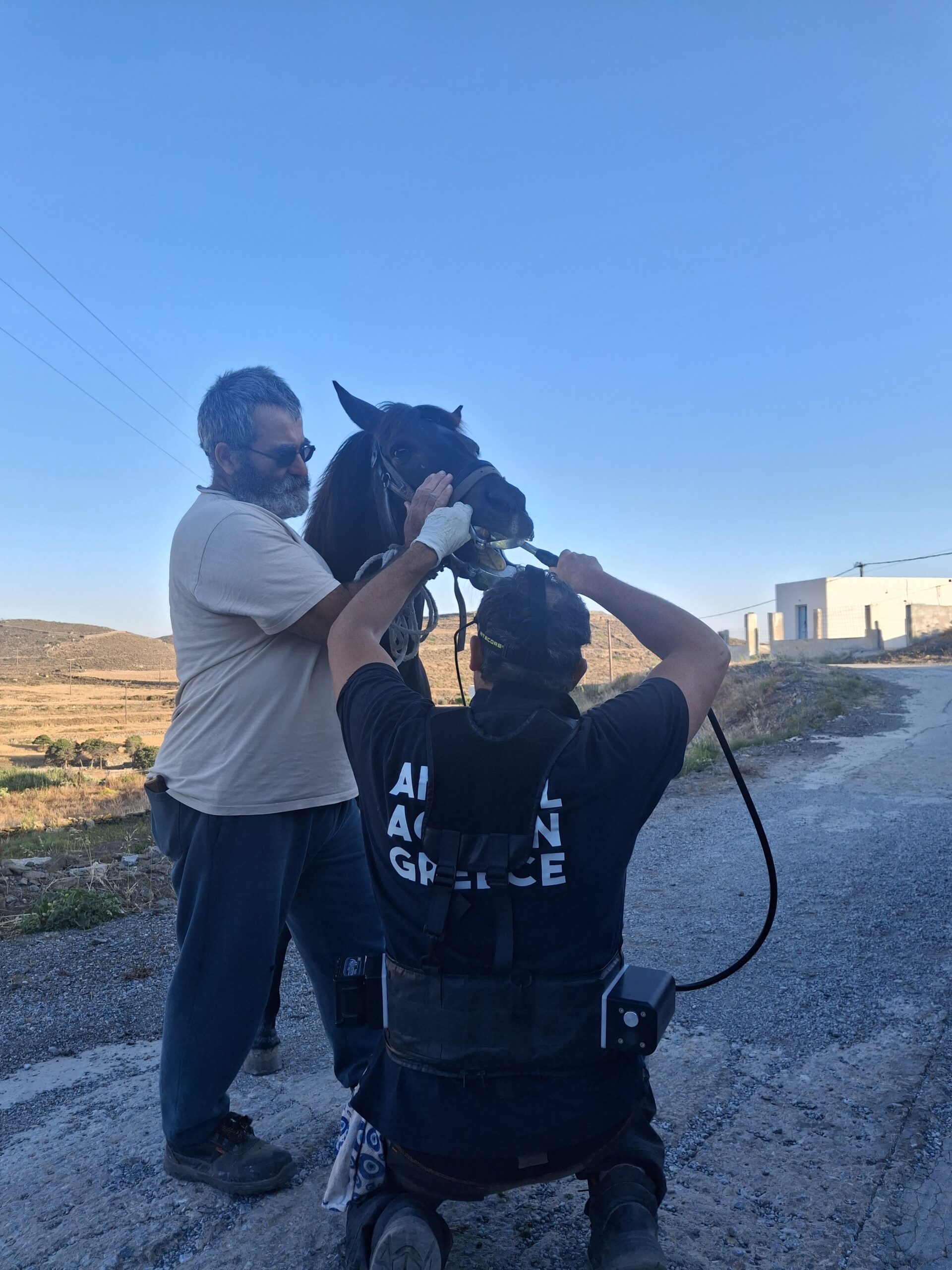
Alkis provided routine dental care to all the equines that required it, primarily rasping sharp enamel points and moderate-sized dental hooks. Two cases were particularly noteworthy: in the first case, he used powered dental equipment to reduce an overgrown tooth at the back of a mare’s mouth. The excessive growth had occurred because the corresponding tooth in the opposite jaw was missing, leaving no natural grinding surface to limit its growth.

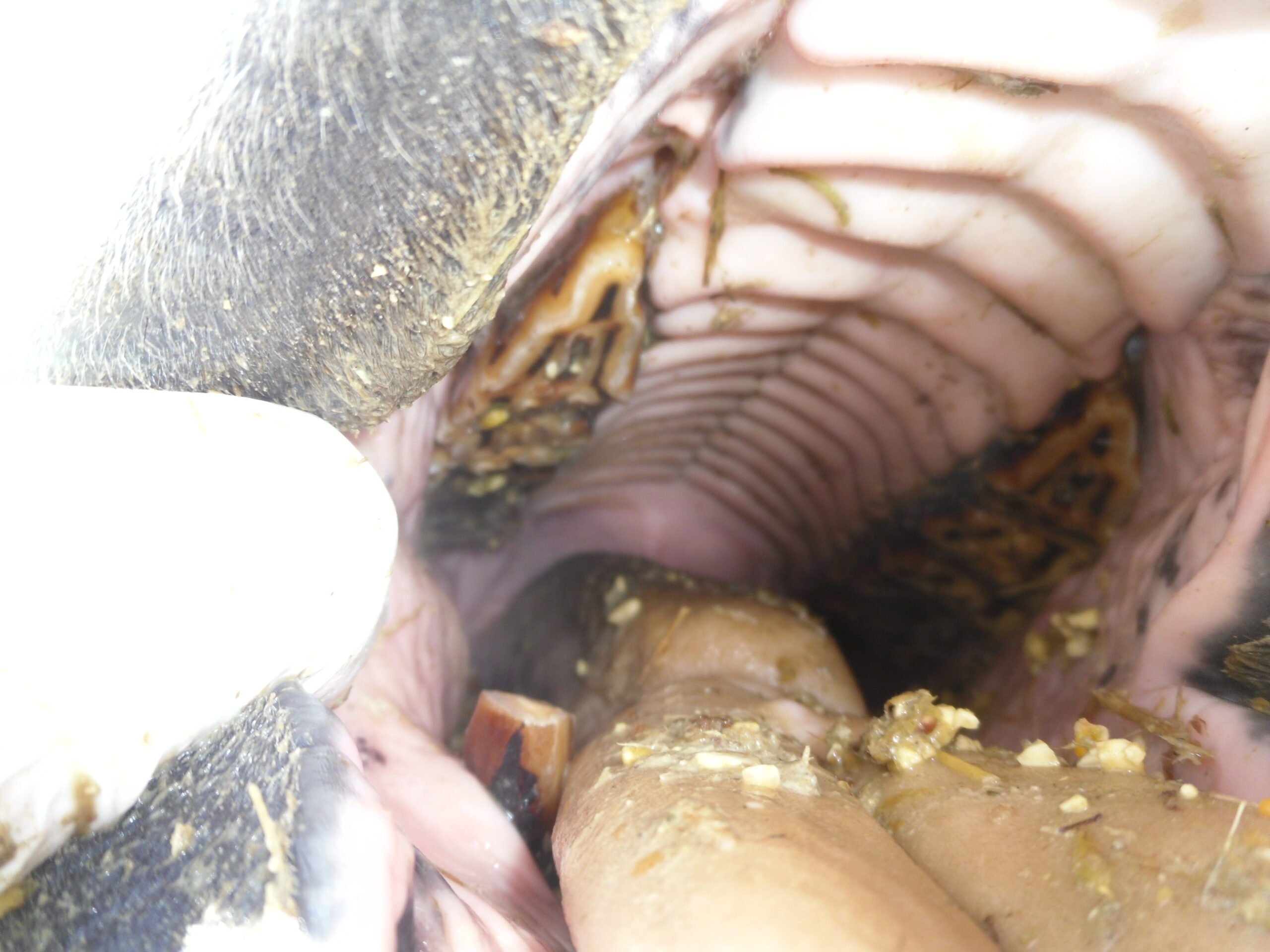
As is often the case, the most challenging patient arrived at the end of the day. An elderly female donkey was presented for a dental examination for the first time in her life. She had enormous dental hooks on her lower first premolars – so large that they resembled canine teeth – which were severely interfering with her ability to chew. Much to the surprise of her owner, who was also witnessing such a procedure for the first time, the calm and cooperative animal remained completely still throughout the rasping procedure using powered dental equipment, without the need for sedation. The donkey experienced immediate relief and although further treatment will be needed for complete treatment, she is now able to chew her food much more effectively.

Hobbling (in Greek named as pastoura, the “traditional” practice of tying an animal’s legs together) remains a welfare concern for equines on the island. During our visits, the team does not encounter animals that are actively hobbled or have fresh hobbling-related wounds. Occasionally, however, we observe scars or areas of shorter or white hair on some animals’ legs, making it difficult to determine whether owners continue the practice or whether these are simply old marks. Our professionals, together with the local animal welfare organization, continue to educate owners about the negative welfare consequences of hobbling. At the same time, stricter enforcement of animal welfare legislation has played an important role in reducing the number of such cases.
Caring for the rescued equines
In addition to treating Amorgos’ working equines, the team also provided veterinary care to the elderly residents of the Animal Zone International sanctuary—four donkeys and two mules. All of the animals are of advanced age and have various minor health issues. Alongside dental treatment and hoof care, every animal received both internal and external parasite control.
Local Support and Acknowledgements
This initiative is carried out each year in collaboration with the local animal welfare organization, Animal Zone International and made possible thanks to the support of the Municipality of Amorgos.
The support of local businesses is also invaluable to the success of the program. We would like to express our special thanks to Blue Star Ferries and Seajets for their support in helping our project by offering free ferry tickets for the equine team members, the appartments “Voula Beach”, “Amorgos” and “Galini” in Katapola for hosting the equine team, Thomas Rent-a-Car for providing, for one more year, the car for the group’s transportation, Youkali and Alifoni for their generous meals, Mavros Bakery and Pothiti’s Sweets for providing breakfasts and Elichryson Café for kindly offering short lunches to the team members on throughout the day.
A heartfelt thank-you goes to Litsa Passari, the incredible coordinator of the local welfare organization, who manages each year every little detail, from local planning to photo and video documentation.
Animal Zone International has witnessed, over the years, the significant positive impact that Animal Action Greece’ continued presence on the island has had on the working equines’ health and welfare.
Through collaboration, trust and a shared commitment, these efforts continue to flourish. The trust shown by the animals’ owners – who faithfully keep their annual appointments and have embraced the programme from the very beginning – has been fundamental to its success.
The team looks forward to returning next year to continue caring for these remarkable animals.